Calming stories for grown-ups
The App Store describes stories designed exclusively for adults, and it carries Apple's 4+ age rating, which means no objectionable content was flagged.
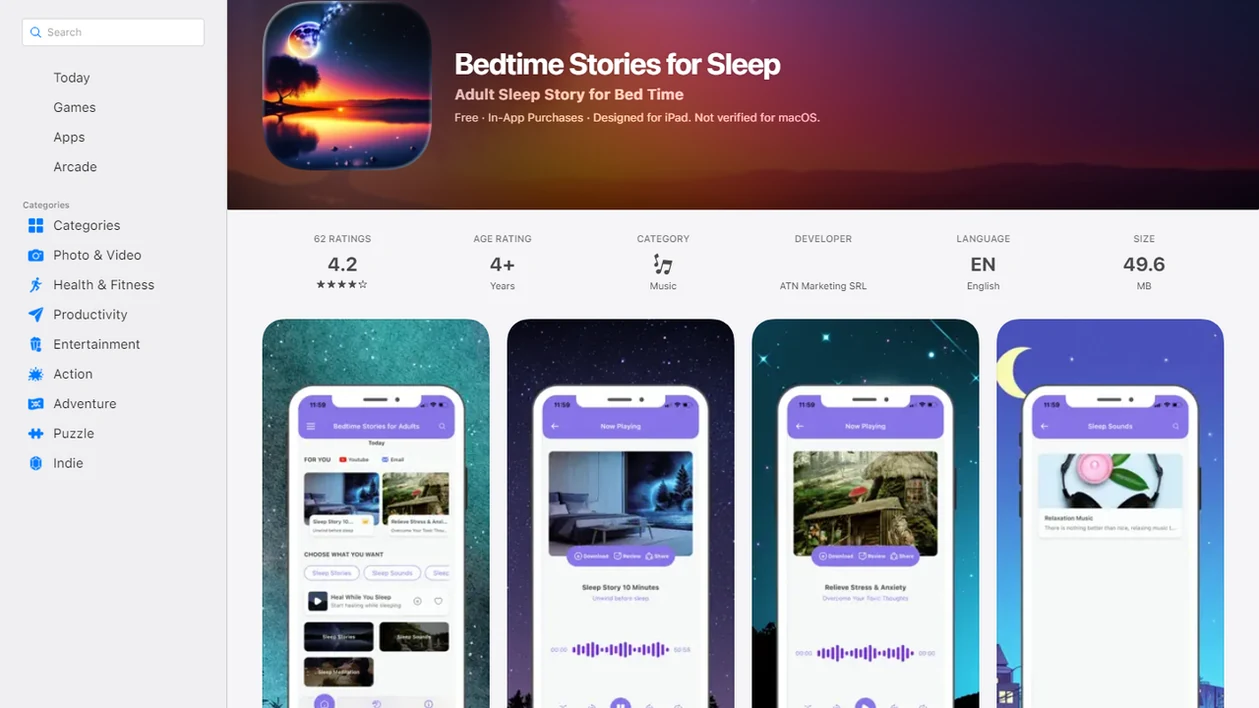
Bedtime stories for adults work when they are slow, low stakes and written for grown-ups. The Bedtime Stories for Sleep app is built around exactly that.
Also on Google Play
The App Store describes stories designed exclusively for adults, and it carries Apple's 4+ age rating, which means no objectionable content was flagged.
Google Play lists sleep sounds, sleep music and meditation for sleep alongside the stories, so you can pick a voice or just a quiet layer.
Most people land here at night, so start with the practical guides. How to fall asleep fast separates what the research backs, such as a warm bath one to two hours before bed, from tricks that have no trial behind them. If you are already awake, what to do when you cannot sleep explains the 20 minute rule from cognitive behavioral therapy for insomnia, and meditation for sleep gives you a five minute script to read in bed.
Want a story right now? Read three original short bedtime stories for adults, or settle in with a full ten minute story from the start-here tiles above. If a steady sound helps you more than a voice, does white noise help you sleep shows what the studies found.
A story for sleep is not a story for entertainment. The best ones for adults share a few traits. The pace is slow, with pauses between sentences. The setting is physical and familiar, such as a ferry, a kitchen or a garden path, so the mind can picture it without effort. Nothing dangerous happens, no mystery needs solving, and the ending has the same mood as the beginning. A cliffhanger or a twist would wake you up, which is why ordinary thrillers and audiobooks work against you at bedtime.
Adults also tend to want stories that do not talk down to them. That does not mean explicit. It means a calm, grown-up voice, real places and small adult details, like a mug of tea or an unread message you let go of for the night. If you have ever felt that kids' bedtime tales were too sweet and adult fiction too gripping, you are looking for the middle, and the guides below explain how to find it.
Choose the story before you are tired, so you are not browsing at midnight. Keep the volume low, dim the screen and start it after your wind-down, not instead of it. Use a timer so it stops by itself, and expect to be awake at the end of a ten minute story some nights. That is normal. The goal is a calmer mind, not a stopwatch race, and the habit does more than any single story.
About 30.5% of US adults slept less than 7 hours a day in 2024, according to the CDC. A lot of that is not a lack of time. It is lying in the dark while the day replays. A story gives your attention one gentle job, which is why we keep coming back to stories to fall asleep to instead of another playlist. The trick is picking one with no cliffhangers, since ordinary audiobooks are written to keep you listening.
Not every sleep story is for everyone. Some people want cozy fantasy or gentle history, which we sort through in bedtime stories for adults that are not childish. Others care most that nothing is explicit, and non erotic bedtime stories for adults explains how to check before you press play.
A sleep timer keeps a story from running all night, and sleeping with audio on all night covers the hearing and sleep-quality side. If you share a bed, sleep stories for couples has speaker and earbud options. Working nights? Try how to sleep after a night shift.
Prefer no glow at all? Screen free bedtime audio shows how to play a story with the phone locked. Traveling is its own problem, so sleep stories for flights and hotels explains what to check before you lose signal, and sleep app privacy explains what to check before you sign up.
Stories do not suit every kind of restlessness. For a mind that loops, read how to stop racing thoughts at night. If the feeling is more dread than chatter, night anxiety and how to wind down is the better start. People who find meditation irritating can weigh sleep stories vs meditation, and those who want to try it can follow a body scan meditation for sleep or read what the research on sleep meditation apps really says.
A few things are worth knowing before you rely on any of it. Sleep meditation side effects are uncommon but real, and knowing when to see a doctor for insomnia matters more than any app. A simple bedtime routine and a few white noise and pink noise facts round out the basics.
Before you pay for anything, see how YouTube sleep stories and sleep story podcasts compare with an app. Calm and Headspace are the big names, and we compare them in Calm vs Headspace, with notes on Calm sleep stories alternatives and Headspace Sleepcasts alternatives. For something free to start with, free guided sleep meditation is the place to look.
This site is run by the small team behind Bedtime Stories for Sleep, and we say so on every page where the app comes up. The App Store lists the app as free to download with in-app purchases. The about page explains how the guides are researched and updated. If you try the app, tell us through our contact form what you would change.
Bedtime stories for adults are calm narrated stories written or chosen to help grown-ups relax and fall asleep. They usually have gentle plots, a slow pace, and a steady voice, without the cartoon tone of children's stories. People use them to quiet racing thoughts and replace late-night scrolling.
They help many people, though results vary. A calm narration gives the mind one slow thing to follow, which can lower the loop of worry. Research on audio and sleep is limited, so treat a story as a bedtime routine rather than a cure. Test it for a week or two and see.
The best bedtime story for an adult is a low-stakes one with a gentle pace and a voice you like, such as quiet nature writing, cozy slice of life, or gentle historical fiction. Avoid thrillers and anything with cliffhangers. The right choice is the one you can drift off to without caring about the ending.
Yes. Free options include podcasts such as Nothing Much Happens, free tiers in sleep apps, public-domain audiobook recordings, and narrated videos. Free choices often come with ads or smaller libraries. Try a free source first, and pay only if you find yourself running out of stories you like.
Most adults do well with 10 to 30 minutes. A shorter story suits people who fall asleep quickly, and a longer one suits people who need more time to settle. Use a sleep timer so the audio stops after you fall asleep and does not play all night.
Listening is usually easier, since you can keep the lights off and your eyes closed. Reading suits people who like a printed book and stop easily. If you read, use a warm, dim light. If you listen, keep the screen dim or locked and set a timer.
Yes. Many people play a soft background sound such as rain with a story, which helps mask noise and keeps the room steady. Keep the story clearly audible and the background lower than the voice. Test the mix before bed so a sudden change in volume does not pull you awake.
Switch to something slower or more familiar. A story with a lot of plot or a dramatic voice can hold your attention. Try a nature narration, a story you already know, or sleep sounds instead. If you lie awake beyond 20 minutes, get up for a short calm activity and return when sleepy.