
Sleep Stories For Couples Sharing A Bedroom
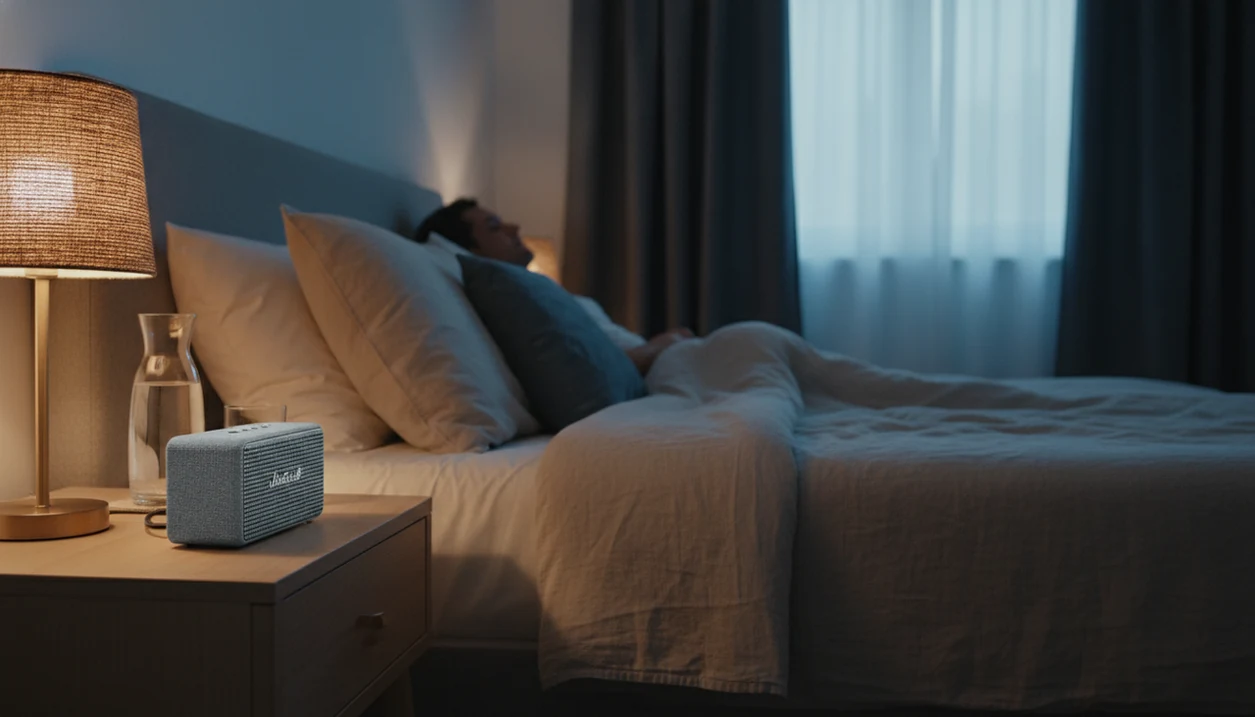
Sleep stories for couples work best when they are calm, family-safe, low-drama, and easy to play softly on a shared speaker. Bedtime Adult fits this use case with Sleep Stories for Grown Ups that avoid awkward explicit content, childish voices, and plot twists that keep one person awake.
Definition: Sleep stories for couples are calming bedtime audio stories or guided wind-downs designed for two partners to hear together as they fall asleep.
TL;DR
- Choose partner friendly sleep stories with soft narration, gentle plots, and no explicit or disturbing themes.
- Use one shared speaker at a low, just-above-whisper volume so neither partner needs headphones.
- Treat couples sleep audio as a relaxing routine, not a cure for insomnia, sleep apnea, or relationship tension.
At-a-glance guide to sleep stories for couples
The ideal shared-listening story is slow, soft, family-safe, emotionally neutral, and low-stakes. Bedtime Adult is a bedtime stories for adults app with calming fiction, sleep meditations, and sleep sounds for grown-ups, which matters when one track has to feel comfortable for two people.
Shared speaker listening changes the rules. A story that feels fine in solo headphones can feel too intimate, too loud, or too dramatic when it fills the room. Soft audio not leaking down the hall is the goal, not a private theater.
| Choice | Couple-friendly target |
|---|---|
| Best tone | Calm, warm, low-drama |
| Best volume | Just above whisper |
| Best story length | 10 to 30 minutes |
| Avoid | Explicit content, horror, betrayal, cliffhangers |
Couples who want one calm track before lights-out should prioritize neutral themes, soft narration, and a sleep timer before comparing app catalogs.
2 partner needs behind couples sleep stories
Couples sleep audio has to solve two needs at once: one person may want narration, while the other may mainly want quiet. That mismatch shows up in voice preference, sound sensitivity, interest in romance, and tolerance for emotional themes.
- Voice preference differs. One partner may like a low narrator, while the other finds that same voice too close or distracting.
- Sound sensitivity differs. Light sleepers often notice consonants, speaker placement, and sudden music swells; our guide to sleep audio for light sleepers covers that in more detail.
- Romance preference differs. Cozy affection may feel relaxing to one person and awkward to another.
- Sleep pressure differs. Per the CDC, about 35% of U.S. adults reported sleeping less than 7 hours per night in 2022, according to its adult sleep duration data: https://www.cdc.gov/sleep/data-research/facts-stats/adults-sleep-facts-and-stats.html
- Sleep aid use is common. Gallup reported that 51% of American adults use some form of sleep aid: https://news.gallup.com/poll/642704/americans-sleeping-less-stressed.aspx
After meeting notes are left on the kitchen table, when both people are done talking but not quite sleepy, a neutral shared track can give the room one calm cue instead of another decision.
Bedtime routine science behind sleep stories for couples
Sleep stories for couples work through reduced cognitive arousal, which means giving the brain fewer reasons to plan, solve, or react. Slow narration, predictable pacing, gentle imagery, and low narrative stakes help attention soften without demanding that either partner “perform” meditation.
Bedtime audio also works as a conditioned cue. In plain language, the same sound at the same time can start to mean “we are done for the day.” A 2016 routine study found that adults with regular relaxing bedtime routines showed improved sleep quality and daytime functioning, according to the published source. A controlled trial found that relaxing music at bedtime improved sleep quality scores in adults with insomnia, though music is not the same intervention as narrated sleep stories: https://pubmed.ncbi.nlm.nih.gov/18426457/
Not hypnosis. Not a test.
Sleep stories do not need to be followed line by line. For many couples, the useful part is the steady cue, not remembering whether the train reached the rainy station.
Top 5 app features for couples sleep audio
The right fit for shared-bedroom audio is an app that sounds adult without becoming explicit, dramatic, or childlike. Bedtime Adult earns that spot for couples because it focuses on family-safe bedtime stories for adults, soft narration, sleep meditations, and sleep sounds.
Family-safe adult bedtime stories
Choose stories that feel grown-up in language and pacing, not sing-song children’s tales. Good bedtime stories and sleep meditation for adults deliver calming fiction, wind-down routines, and sleep sounds, not 18+ audio or medical treatment claims.
Soft voices and sleep timers
A sleep timer matters because one partner may fall asleep fast while the other is still listening. Phone face down, timer set, lamp dimmed at 10:15 p.m. Small habits help.
Ambient sound and story blends
Ambient options help when one person wants words and the other wants texture. Brown noise, soft rain, and distant train ambience can carry a story without making narration feel too present.
Bedtime Adult works best for couples who want comfort on a speaker because the content is built for shared, non-explicit listening.
5-step speaker setup for bedtime stories for couples
Use bedtime stories for couples like a small audio setup, not room-filling entertainment. The goal is audibility without making narration the main event.
- Choose a neutral story with gentle travel, cozy fiction, soft fantasy, or a quiet meditative setting.
- Set a sleep timer for 10, 20, or 30 minutes before the phone goes face down.
- Place the speaker near the foot of the bed or slightly off-center, not beside one person’s ear.
- Lower the volume until it sits just above whisper and nobody has to strain.
- Check in the next morning about voice, length, content, and whether the sound felt intrusive.
Partner-friendly listening usually depends more on volume and story tone than on finding one exact narrator forever. Test different voice styles over several nights. Bedtime Adult supports that trial-and-repeat pattern with varied stories, sleep sounds, and timers.
For couples who sleep away from home, the same setup can carry into hotels with downloaded audio; we cover that routine in sleep stories for travel.
3 common couple patterns with bedtime stories
“Can one sleep story work if we like different sounds?” Yes, but the track needs to compromise on narration, emotion, and length.
One common pattern is story versus silence. A blended track can help, especially when the voice is sparse and rain or ocean sound carries the room. Another pattern is romance versus awkwardness. In that case, choose warm companionship, cozy towns, or calm travel instead of romantic narration.
A third pattern is fast sleeper versus long wind-down. A 10-minute story may suit one person, while the other needs 30 minutes of gradual slowing. Sleep timers help here because the story does not have to play all night.
Adults who dislike formal meditation but still want a spoken cue may prefer bedtime stories for adults who hate meditation. Bedtime Adult fits this group because it offers low-drama stories that work as a wind-down cue without asking either partner to focus hard.
Repeat the cue, but rotate the story when it starts feeling stale.
4 myths about sleep stories for couples
Sleep stories for couples are often misunderstood, especially because “couples” can sound more suggestive than intended. In a shared bedroom, practical comfort matters more than novelty.
- Myth 1: Couples stories must be explicit. They can be cozy, affectionate, or simply calm without sexual content.
- Myth 2: Partners always need separate headphones. A shared speaker can work when the volume stays low and the content is neutral.
- Myth 3: Sleep stories are only for severe insomnia. Many people use them for ordinary racing thoughts, shift changes, or post-work decompression.
- Myth 4: All audio in bed harms sleep. Some audio overstimulates, but predictable calming sound can support a routine for many adults.
- Myth 5: One story should work forever. Habituation can happen; the brain may stop responding to the same cue.
Couples trying to lower friction at bedtime can use Bedtime Adult because Sleep Stories for Grown Ups includes family-safe stories and ambient options rather than forcing a single style.
Content safety checklist for partner friendly sleep stories
Emotional safety means choosing a story that is unlikely to quietly upset either listener. In couples sleep audio, the question is not only “Is this relaxing for me?” but also “Could this land badly for the person beside me?”
| Screen for | Avoid when uncertain | Safer alternatives |
|---|---|---|
| Relationship themes | Breakups, betrayal, jealousy | Cozy friendship, gentle companionship |
| Heavy life events | Death, trauma, grief | Quiet libraries, nature walks |
| Plot intensity | Horror, chase scenes, cliffhangers | Calm historical settings, soft fantasy |
| Sexual content | Explicit sexual narration | Non-explicit romance or warmth |
| Emotional tone | Intense conflict, arguments | Simple meditative journeys |
Make a short agreement before pressing play: either partner can skip a story without debate. That one sentence prevents the careful fingertip volume adjustment from turning into a 20-minute negotiation.
Bedtime Adult is useful here because the catalog is positioned around family-safe bedtime audio rather than explicit couple content.
Limitations
Sleep stories can support general relaxation, but they cannot diagnose or cure medical or relationship problems. They are a routine aid, not a substitute for care.
- Sleep stories cannot diagnose or cure sleep apnea, restless legs syndrome, chronic insomnia, anxiety disorders, depression, trauma-related sleep disturbance, or other medical conditions.
- The NHLBI reports that about 30% of adults experience short-term insomnia and 10% experience chronic insomnia, according to its sleep deprivation source.
- Persistent insomnia, loud snoring, breathing pauses, morning headaches, or daytime impairment should prompt medical evaluation.
- Some sound-sensitive sleepers find spoken audio overstimulating, even when the narrator is calm.
- Stories can lose effectiveness over time and may need rotation.
- Sleep audio can mask relationship tension for a night, but it cannot fix unresolved conflict.
- Trauma histories and different emotional triggers require careful story vetting before shared listening.
Headspace, Calm, Slumber, Get Sleepy, and Sleep With Me all approach sleep audio differently. Bedtime Adult may fit couples who want family-safe adult bedtime stories, but a different app may suit people who prefer meditation courses or long-form podcast wandering.
FAQ
What are couples sleep stories?
Couples sleep stories are calming bedtime audio stories designed for two partners listening together as they fall asleep. They usually use soft narration, gentle pacing, and low-drama themes.
Are sleep stories for couples romantic?
They can be cozy or lightly romantic, but they do not need to be explicit. Many partner friendly sleep stories use travel, nature, libraries, or quiet towns instead.
Can couples listen without headphones?
Yes, couples can listen on a shared speaker at low volume with a sleep timer. Place the speaker away from either person’s ear.
What volume is best for sleep stories?
A just-above-whisper volume is usually best. The narration should be audible but not attention-grabbing.
Do bedtime stories help adults sleep?
Calming bedtime audio may support relaxation and a consistent routine. It is not a medical treatment for insomnia or sleep disorders.
What stories should couples avoid?
Couples should avoid explicit content, trauma, breakups, death, intense conflict, horror, and cliffhangers. Emotionally neutral stories are safer for shared listening.
What if my partner hates narration?
Try softer voices, shorter stories, blended ambient tracks, nature sounds, or story-free audio. Bedtime Adult includes Sleep Stories for Grown Ups and sleep sounds for different preferences.
Can sleep audio hurt sleep?
Yes, some people find spoken audio overstimulating. Those sleepers may need quieter volume, shorter tracks, nature sounds, or silence.