
Safe Bedtime Stories For Adults: Content, Safety Standards, And Claims
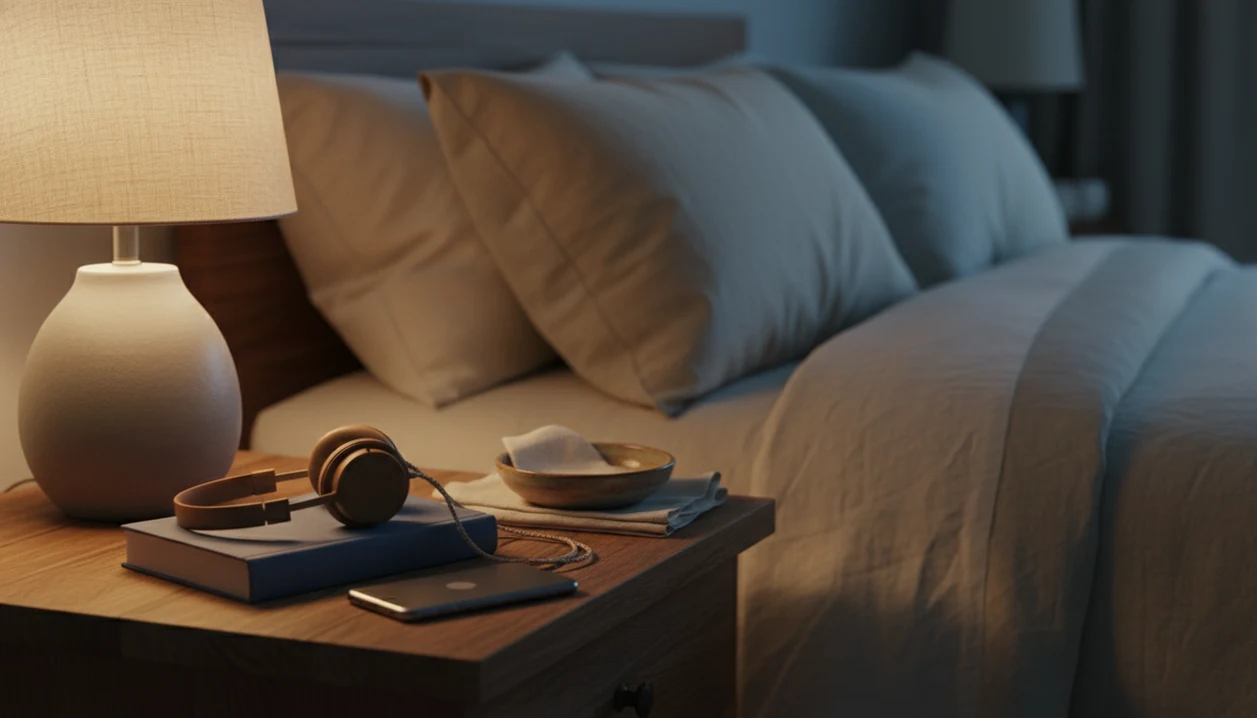
Safe bedtime stories for adults are calming, non-explicit sleep stories that avoid sexual content, graphic violence, intense scares, loud interruptions, and medical promises. A safe adult sleep story should help listeners wind down without becoming stimulating, disturbing, or inappropriate in shared spaces.
> Scope: This safety guide explains what makes adult sleep stories non-explicit, low-arousal, and appropriate for shared spaces. It is general wellness information, not medical advice or treatment guidance.
- Safe adult sleep stories should be non-explicit, non-violent, low-arousal, and appropriate if overheard by a partner, child, or roommate.
- Sleep audio safety means clear content boundaries, gentle narration, predictable plots, no loud ads, and no claims to cure insomnia or anxiety.
- Adult bedtime stories can support a healthy wind-down routine, but they are not medical treatment for chronic sleep or mental health conditions.
Safe Adult Sleep Stories At A Glance
Safe adult sleep stories are calming, grown-up, non-explicit bedtime stories designed for general relaxation, not arousal, shock, or treatment. They should feel suitable if a partner is half-awake beside you or a roommate hears a line through the wall.
A safe story excludes sexual content, graphic violence, intense horror, trauma shocks, loud ads, and cure claims. The tone can still be adult. It may include a seaside inn, a quiet train ride, or a low-drama mystery with no threat on the page.
The room matters.
If the volume is lowered with a careful fingertip after someone whispers, “Can you turn it down one notch?”, the story should still feel comfortable. Safe bedtime audio supports a wind-down cue; it does not replace medical care for sleep disorders.
Five Facts About Sleep Audio Safety For Adults
- Safe adult sleep stories are non-sexual, non-graphic, and family-safe. The content should be appropriate if overheard by a partner, child, or roommate.
- Gentle, predictable focus can reduce racing thoughts. A slow story gives the mind something quieter than doomscrolling, unfinished email, or tomorrow’s calendar.
- Sleep stories work best inside a consistent wind-down routine. Clinicians typically recommend steady sleep hygiene basics, such as regular timing, a dark room, and less stimulating screen use before bed.
- Responsible sleep audio avoids medical promises. It may support relaxation, but it should not claim to cure insomnia, anxiety, depression, PTSD, or sleep apnea.
- Triggers vary. Clear theme notes, opt-outs, and content labels matter because one listener’s cozy rain scene may remind another person of a hard night.
Adults are generally advised to get at least seven hours of sleep, and insomnia symptoms are common. That context makes careful claims important, not optional.
How Safe Bedtime Stories For Adults Work
Safe bedtime stories for adults work mainly by shifting attention away from rumination, doomscrolling, and stress. The mechanism is simple: low-arousal narrative design gives the brain a soft track to follow when it keeps reaching for problems.
Good sleep stories use slow pacing, familiar settings, minimal conflict, and soft narration. In plain terms, less happens. A narrator might describe a lamp-lit harbor or a quiet library aisle instead of a chase, a confession, or a cliffhanger. Brown noise filling the corners can do a similar job for some listeners.
The evidence is indirect. Research on relaxation audio and sleep hygiene supports structured bedtime routines, but direct trials on this exact category are limited. Bedtime stories and sleep meditation for adults can offer calming fiction, wind-down routines, and sleep sounds, family-safe, not 18+ content. They do not provide medical treatment.
For many adults, a repeatable audio cue is easier than trying to “clear the mind” because the story gives attention somewhere gentle to land.
Content Safety Standards For Non-Explicit Sleep Stories
A safe sleep-story library should be judged by concrete content rules, not vague "relaxing" language. These standards make non explicit sleep stories safer for shared bedrooms and tired brains.
- No erotic or pornographic story content: Sleep stories should not use sexual scenes, arousal framing, or adult-entertainment cues.
- No graphic violence or horror shocks: Gore, intense horror, jump scares, and disturbing crime detail are outside the safety standard.
- Grown-up tone without infantilizing: A calm adult narrator should not sound like a sing-song children’s story voice.
- Family-safe language: Accidental overhearing should not create an awkward moment in a hallway or shared room.
- Calm audio presentation: Volume should stay steady, without startling spikes, harsh ads, or sudden effects.
The Sleep Stories for Grown Ups category works best when it feels mature, quiet, and plainspoken.
Safe Adult Sleep Stories Content We Do Not Cover
Safe adult sleep stories should not cover explicit sex, sexualized romance, graphic violence, crime detail, abuse, self-harm, suicide, traumatic illness, intense grief, or horror. Those themes can be meaningful in daytime literature, but they are poor fits for bedtime safety.
Some mild emotion may still appear. A character can miss home, walk through fog, or feel nervous before a train arrives. The key is whether the scene settles down rather than activates the listener. If the jaw tightens or the phone gets picked up again, the story has probably missed the mark.
Romantic does not automatically mean erotic. A gentle letter, a quiet reunion, or a fond memory can be safe when it stays non-explicit. Sensitive themes should be labeled clearly, especially for people choosing family-safe adult sleep stories in shared spaces.
Medical Claims Bedtime Stories For Adults Should Avoid
Can bedtime stories for adults cure insomnia? No. Sleep stories may support relaxation and bedtime routines, but they should not claim to cure or treat insomnia, anxiety, depression, PTSD, sleep apnea, panic disorder, or other clinical conditions.
Careful wording matters because sleep problems are widespread. About 30% of adults report short-term insomnia symptoms and about 10% report chronic insomnia, according to the Sleep Foundation: https://www.sleepfoundation.org/insomnia. The CDC has also reported that more than one-third of U.S. adults unintentionally fell asleep during the day at least once in a month: https://www.cdc.gov/mmwr/preview/mmwrhtml/mm6008a2.htm.
A story can be part of a wind-down plan. It is not a diagnosis, a prescription, or a substitute for care. If insomnia lasts for weeks, causes daytime impairment, includes gasping or choking during sleep, or overlaps with mental health symptoms, read more on when to see a doctor for insomnia.
The most medically responsible way to frame adult sleep stories is as relaxation support combined with sleep hygiene, not as treatment for a disorder.
Common Myths About Safe Bedtime Stories For Adults
Adult bedtime stories are not automatically erotic or explicit. In this context, “adult” means written for grown-ups, with mature pacing, ordinary life details, and calm narration rather than children’s characters or adult content.
Another myth is that every sleep story is safe for every listener. It isn’t. A peaceful ending before the timer stops may be soothing for one person, while a hospital scene, storm sound, or certain voice texture may bother someone else.
Relaxing audio is also not medical treatment for insomnia. It can make the pre-sleep window feel less lonely and less frantic, but that is different from treating a sleep disorder. The question of can sleep stories cure insomnia needs a clear no.
Longer is not always better. The safest format is calm, predictable, clearly labeled, and low-stimulation.
How To Report Sleep Audio Safety Concerns
Report a sleep audio safety concern with the story title, episode name, timestamp, and concern type. Useful concern types include explicit content, distressing themes, loud audio, misleading health claims, or missing content warnings.
Be specific. “Loud sound at 18:42” is easier to review than “bad audio.” “Unexpected self-harm reference near the ending” helps a content team decide whether to add a warning, edit the episode, or remove it.
User reports improve labeling, review, and removal decisions across a library. They also help catch issues that a general content screen may miss.
Urgent medical or mental health concerns should not go through an app feedback channel. If someone may harm themselves or needs immediate support, use local emergency services or crisis resources such as sleep meditation crisis help.
Sources And Safety Review Standards For Sleep Audio
Sleep audio safety claims should be grounded in medical and public-health sources, then translated carefully into wellness language. This means bedtime stories may support relaxation and routine, but they are not described as diagnostic, therapeutic, or curative.
For sleep-safety framing, a responsible review draws on sources such as the CDC, NIH or MedlinePlus, the American Academy of Sleep Medicine, and established sleep-health education resources. Those sources guide broad statements about sleep duration, insomnia warning signs, sleep hygiene, and when to seek clinical care. Content standards are reviewed separately for explicit sexual material, graphic violence, trauma-heavy themes, self-harm references, startling sound effects, and loudness spikes.
A practical review cycle looks like this:
- Check medical and public-health wording against current sleep guidance before publishing or materially updating a page.
- Screen each story for non-explicit language, low-conflict pacing, distressing themes, and audio that could startle a half-asleep listener.
- Label sensitive content plainly when a mild theme remains suitable but may not fit every listener.
- Escalate user reports to update labels, make edits, suppress recommendations, or remove an episode.
- Revisit sources and safety rules at least twice a year, and sooner after a credible correction, policy change, or repeated listener concern.
Limitations
Safe bedtime stories can be useful, but they have clear limits.
- They do not replace medical evaluation for chronic insomnia, especially when sleep problems last for weeks or impair daytime life.
- They do not treat sleep apnea, depression, PTSD, panic disorder, or other clinical conditions.
- Some listeners find spoken audio stimulating rather than relaxing, especially if they follow plot closely.
- Individual triggers vary, so no content library can be universally safe for every listener.
- Benefits are mostly inferred from relaxation audio and sleep hygiene research, not only from adult sleep story trials.
- Audio in bed can become disruptive if volume, autoplay, headphones, or notifications are poorly managed.
- Free platforms may include ads or algorithmic recommendations that undermine sleep audio safety.
- Privacy also matters. If an app collects sleep habits or listening data, review its sleep app privacy practices.
A phone turned face down on the nightstand helps, but only if the sleep timer is already set.
FAQ
What are safe adult sleep stories?
Safe adult sleep stories are calming, non-explicit bedtime stories for grown-ups. They use low-drama plots, gentle narration, and family-safe language to support relaxation.
Are sleep stories for grown-ups explicit?
Safe sleep stories for grown-ups are not erotic or pornographic. Here, "grown-ups" means mature tone, ordinary adult life details, and calm pacing, not sexual content.
What makes sleep audio unsafe?
Sleep audio becomes unsafe when it includes explicit content, graphic themes, loud ads, jump scares, distressing surprises, or misleading health claims. Poor labeling can also make otherwise calm audio risky for sensitive listeners.
Can children overhear adult sleep stories?
Non-explicit adult sleep stories should be appropriate if briefly overheard by a child, partner, or roommate. They are still made for adults, not positioned as children’s bedtime content.
Do sleep stories cure insomnia?
No. Sleep stories may support relaxation and a bedtime routine, but they do not cure or treat insomnia.
Are scary sleep stories safe for bedtime?
Scary sleep stories are usually poor fits for bedtime because horror, jump scares, and intense suspense can raise alertness. Low-stimulation stories are safer for sleep.
Are romantic sleep stories safe?
Gentle, non-explicit romance can be safe when it avoids sexualized scenes and arousal framing. Erotic content is outside a safe bedtime story standard.
Can sleep audio cause anxiety?
Yes, some voices, themes, sound textures, or story events can feel activating for certain listeners. Clear labels and easy opt-outs reduce that risk.
How should sleep stories be labeled?
Useful labels include non-explicit, no violence, theme notes, audio length, narrator style, sound effects, and content warnings. Labels should help listeners decide before the story starts.