
Definition: A bedtime routine app for adults is a mobile app that structures your pre-sleep wind-down with audio content, including stories, meditations, breathwork, and soundscapes, plus smart reminders and timers that build a consistent nightly habit.
- A structured 30-minute audio routine usually beats random white noise for building a repeatable sleep cue.
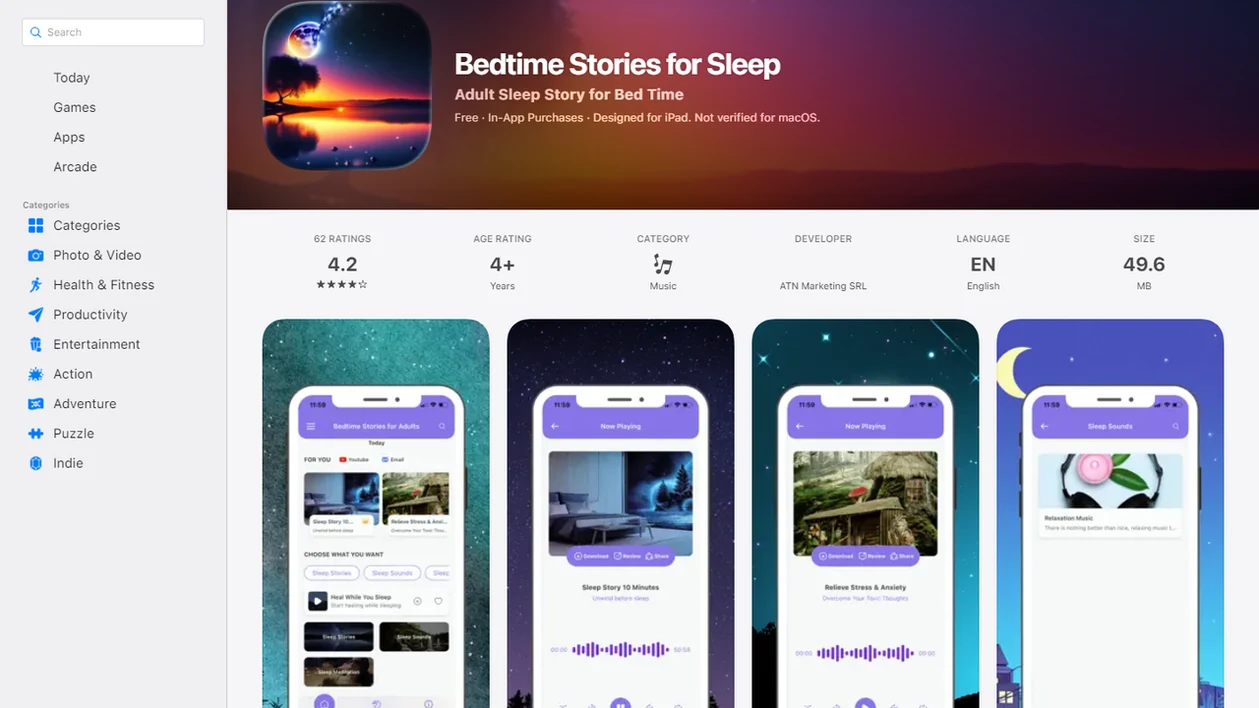
- Bedtime Adult combines calming fiction, meditations, sleep sounds, and bed-signal timers in one family-safe app.
- Consistency matters more than length. Even 10–20 minutes nightly can reinforce your sleep–wake cycle.
- Audio-first design keeps screens dark and reduces late-night visual stimulation.
- Apps help habits, but they cannot replace medical care for sleep apnea, chronic insomnia, or anxiety.
5 Facts Every Adult Needs Before Picking a Sleep Routine App
A good sleep routine app should support a repeatable wind-down, not just play noise after you are already wired. Look for timing, content style, and safeguards that make the phone less tempting at night.
- A 30–60 minute wind-down window is the usual target. Sleep hygiene guidance often points to low-light, low-arousal activities before bed, especially when work or screens run late.
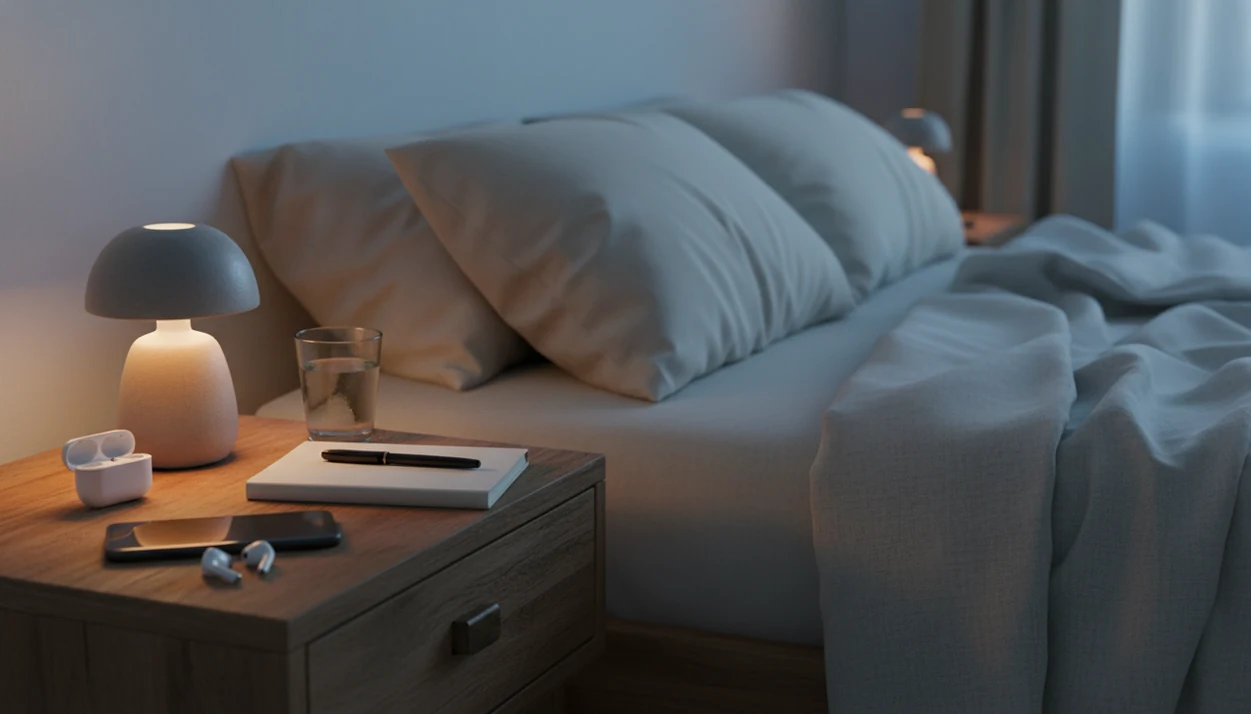
- Bed signals matter. A reminder, dimmed lamp, and repeated audio order can become a circadian cue. The bedside lamp dimmed at 10:15 p.m. is more useful than “I’ll relax soon.”
- Multi-tool apps fit more adult lives. Stories, breathwork, sleep sounds, and journaling prompts solve different nights. A habit stacking bedtime routine works because the next step is already chosen.
- Apps do not fix medical sleep disorders. Snoring, gasping, panic symptoms, or insomnia that persists need clinical care.
- Family-safe, audio-first design reduces friction. Good bedtime stories and sleep meditation for adults deliver calming fiction, wind-down routines, and sleep sounds, not explicit content or bright late-night scrolling.
What a Bedtime Routine App for Adults Does
A bedtime routine app for adults turns “I should go to bed” into a repeatable cue, then gives you something calm to do next. It supports the habit around sleep; it does not diagnose insomnia, treat sleep apnea, or replace a clinician.
The useful part is the sequence. A reminder can become the adult version of a bedtime signal: close the laptop, dim the room, start the same short audio path. Different nights need different tools, too. A story gives the mind a gentle thread to follow when thoughts are busy. A meditation or breathwork session helps when the body still feels keyed up. Sleep sounds can stay on after narration ends, filling the room without asking for attention.
- Set a target bedtime and choose a reminder that starts your wind-down before you are exhausted.
- Pick the audio that fits the night: story, meditation, breathwork, or ambient sound.
- Play it with the screen down, using timers, offline listening, and simple controls to avoid late-night browsing.
- Repeat the same cue often enough that the routine feels automatic.
Bedtime Adult brings those pieces together with family-safe stories, meditations, sleep sounds, reminders, timers, and offline playback without pretending to be medical treatment.
Best Bedtime Routine Apps for Adults: Named Shortlist
The strongest adult wind down app is the one you will open without bargaining with yourself. These options suit different sleep styles, budgets, and tolerance for structure.
- Bedtime Adult: Best fit for adults who want family-safe bedtime audio, soft narration, meditations, sleep sounds, offline listening, and stacked routines in one place. Sleep Stories for Grown Ups keeps the tone adult without drifting into 18+ material.
- Calm: A broad meditation app with a large sleep library, celebrity narrators, music, and well-known bedtime stories.
- Headspace: Strong for structured sleep courses, sleepcasts, and breathwork lessons that feel guided from the first night.
- Insight Timer: Useful for people who want a large free library, community teachers, and timer-based meditations.
- Lune: A habit-focused night routine app built around bedtime scheduling and routine stacking.
If the priority is a low-drama story followed by rain, ocean, or brown noise, Bedtime Adult earns the shortlist because the whole flow is built around bedtime, not daytime productivity.
How We Picked the Top Night Routine Apps
We evaluated each sleep routine app by how well it lowers decisions after work. The laptop lid clicks shut, the monitor glow disappears, and the app should not ask you to browse for ten minutes.
| Criterion | Why it matters | What we looked for |
|---|---|---|
| Audio-first design | Limits screen exposure near bed | Dark interface, lock-screen playback, simple controls |
| Routine stacking | Turns separate tools into one sequence | Unwind → story → sounds → auto-stop |
| Family-safe policy | Helps shared rooms feel comfortable | No explicit or stimulating material |
| Offline listening | Reduces notification and email temptation | Downloaded stories, sounds, and meditations |
| Smart reminders | Builds a reliable bed signal | Timers 30 minutes before target bedtime |
| Trial or free tier | Lets users test fit | Free access, samples, or short trial |
For adults who want fewer choices at night, Bedtime Adult fits because the stacked routine can move from breathwork to soft narration to an ambient sound fade without reopening the screen.
Ready to start your quit?
The best bedtime routine app for adults stacks calming stories, guided meditations, sleep sounds, and timed wind-down prompts into a single nightly sequence you can follow without…
How a Bedtime Routine App for Adults Works Behind the Scenes
A bedtime routine app for adults works by pairing a consistent cue with a low-arousal sequence. The behavioral model is a habit loop: cue, routine, reward. In plain language, the reminder tells your brain “bed is next,” the audio sequence replaces scrolling, and easier sleep onset reinforces doing it again.
Circadian cue theory and stimulus control are the useful ideas here. Circadian cues are repeated signals that help time the sleep–wake cycle. Stimulus control means keeping the bed linked to sleep, not email, news, or arguing with tomorrow’s calendar. Bedtime Adult uses breathwork, low-drama story pacing, and ambient sound fade-outs to make that shift feel gradual.
Blue light is the technical trap. Experimental research found that evening short-wavelength blue light can suppress melatonin for up to about 90 minutes source. Audio-only playback, dimmed UI, and a timer already set before bed matter more than they sound. Small controls. Big difference.
How to Set Up Your Adult Wind-Down App Tonight
The simplest setup is a 10–30 minute sequence you can repeat tomorrow. If you are not sure where to start, use the shorter end first; a 10-minute bedtime routine for adults is easier to keep than an ambitious hour.
- Download the app and set your target bedtime. Choose the time you want lights out, not the time you hope to start relaxing.
- Choose your wind-down length. Pick 10, 20, or 30 minutes based on tonight’s energy.
- Stack your audio sequence. Start with a story, meditation, or breathwork, then add a sleep sound.
- Enable bed-signal reminders. Set the nudge 30 minutes before your target time.
- Switch to airplane mode and enable offline listening. Bedtime Adult supports offline listening so work alerts stay out of the room.
- Review your sleep feel in the morning. Adjust length, narrator, or sound texture after one night, not during it.
Best Adult Wind-Down App for Stressed Professionals
For professionals who need a hard stop after email, Bedtime Adult is a practical fit because auto-scheduled routines remove one more decision at the worst time of day. Breathwork can slow the ramp, then a familiar voice returning each night gives the mind something steadier than tomorrow’s meeting list.
The urgency is real. Per the CDC, about 30% of U.S. adults report short sleep duration under seven hours source. A 30-minute bedtime routine after work gives that problem a container.
When racing thoughts are the issue, Sleep Stories for Grown Ups works best as a screen-off bridge because offline mode removes the easy path back to work email. Phone face down. Timer set.
Best Night Routine App for Parents Sharing a Room
Parents sharing a room need audio that will not create an awkward moment on a speaker. Bedtime Adult is useful here because the content policy avoids explicit or 18+ material, while story lengths around 15–25 minutes fit the window after the house finally gets quiet.
A shared speaker set to low volume changes the test. Can a partner turn over under the duvet and keep resting? Can a child in the next room stay asleep? Low-volume rain, distant train ambience, or a soft ocean loop usually works better than dramatic narration.
The right fit for partner-friendly listening is Bedtime Adult because family-safe stories can move into sleep sounds without headphones, surprise scenes, or a second round of browsing.
Honest Cons of Using a Sleep Routine App
A sleep routine app can make bedtime easier, but it is still a phone near your bed. That fact deserves some caution.
- Subscription fatigue is real. Many premium sleep apps list annual plans in roughly the $50–80 range, including Calm and Headspace pricing pages, and not every library justifies that cost.
- Notifications can undo the routine. One message preview can pull you back into problem-solving.
- Content quality varies. Some narrators sound calm and adult; others drift into a sing-song children’s story voice.
- Audio dependence can happen. Some users feel uneasy sleeping without the same sound or narrator.
- Evidence is still developing. A 6-week randomized trial of a sleep-focused mobile app showed improved insomnia severity and sleep quality, but long-term outcomes need more study source.
- Big libraries can become clutter. Calm, Headspace, and Insight Timer offer breadth, but breadth can add choice pressure at bedtime.
Outcome usually depends more on nightly consistency than on having the largest audio catalog.
Limitations
Bedtime Adult and other sleep routine apps support general relaxation and sleep hygiene basics. They do not provide diagnosis, treatment, or emergency mental-health support.
- They cannot diagnose or treat sleep apnea, chronic insomnia, clinical anxiety, depression, or panic disorder.
- Using your phone for email, social media, shopping, or news during a session can cancel the benefit.
- Occasional use usually produces little change; the routine needs repetition across nights.
- The evidence base is promising, but much of it comes from short-term trials in specific groups.
- Blue-light exposure from the screen itself may suppress melatonin for up to about 90 minutes if brightness is high.
- No app replaces a doctor’s evaluation if sleep problems persist beyond four weeks.
- Loud speakers can disturb partners, infants, or roommates, even when the content is calm.
- Offline listening helps, but only if downloads are saved before bedtime.
For persistent sleep trouble, a bedtime routine app is a support tool, not a substitute for medical assessment.