
Sleep Meditation For Racing Thoughts At Bedtime
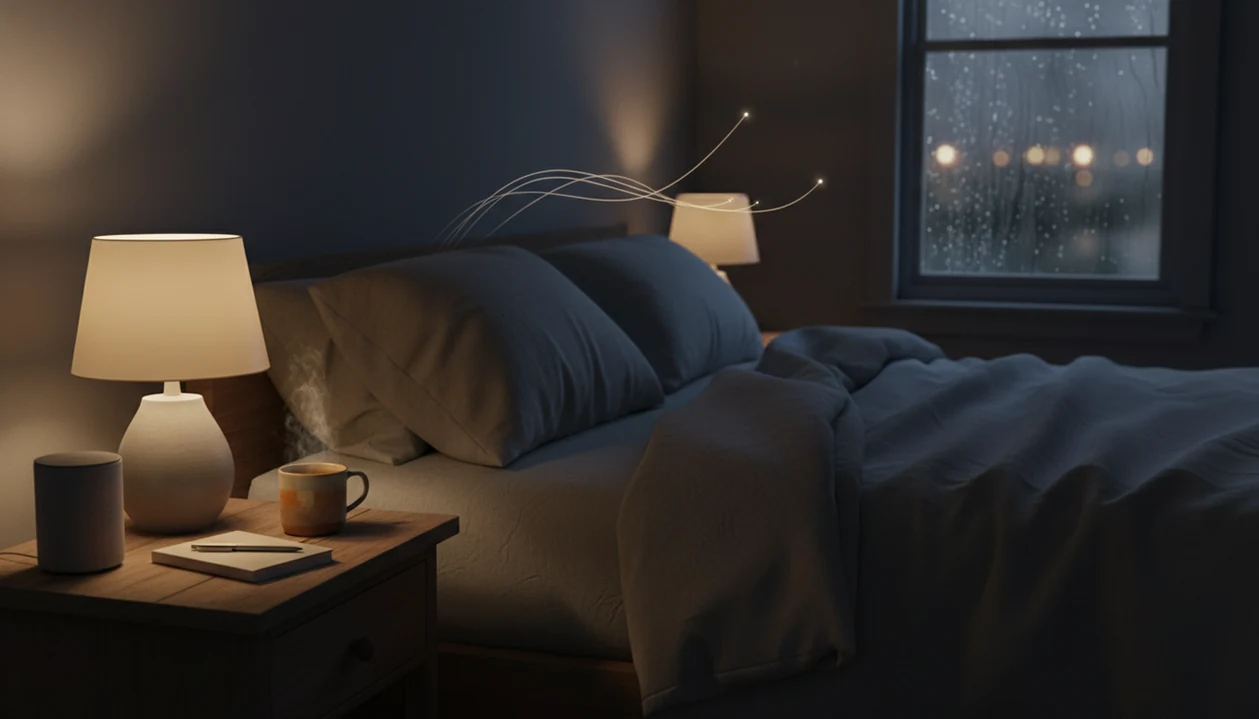
Sleep meditation for racing thoughts gives your mind a gentle, repeatable focus at bedtime so worry loops have less room to take over. Start with 5–10 minutes of slow breathing, body relaxation, and a simple anchor such as counting, a calm story, or soft sleep sounds; it can support sleep, but it should not be treated as a cure for insomnia or anxiety disorders.
> Definition: Sleep meditation for racing thoughts is a bedtime relaxation practice that combines slow breathing, body awareness, and gentle attention training to help a busy mind settle before sleep.
TL;DR
- Use a short 5–10 minute routine first, rather than forcing a long meditation when you are already frustrated.
- Pair meditation with a 30–60 minute wind-down that includes dim lights, reduced screens, and a calming pre-sleep activity.
- Choose a technique that gives thoughts somewhere soft to land: breath counting, a body scan, progressive muscle relaxation, sleep sounds, or a family-safe bedtime story for adults.
5-minute sleep meditation routine for racing thoughts
A 5-minute sleep meditation for racing thoughts should lower stimulation, lengthen the exhale, relax the body, and give the mind one gentle place to return. Keep the goal small: settle your system, not force sleep.
Dim the room first. Try a bedside lamp lowered around 10:15 p.m., phone face down, sleep timer already set. Breathe in for four counts and out for six. Then scan from forehead to jaw, shoulders, belly, hips, and feet. Choose one anchor, such as counting breaths, soft rain, or a low-drama story.
Many adults deal with short sleep or insomnia symptoms, so frustration at bedtime is common. Meditation can support a routine, but it is not a cure. Tools like Bedtime Adult can be part of that routine; Bedtime Adult offers Sleep Stories for Grown Ups, calming fiction, sleep meditations, and sleep sounds for adults, but it should be treated as a wind-down aid rather than medical treatment.
Small is allowed.
Nervous system effects of sleep meditation for racing thoughts
Sleep meditation for racing thoughts works by reducing physiological arousal and shifting attention away from repetitive worry loops. The aim is not to delete thoughts; it is to meet them with less urgency.
Slow breathing can support the relaxation response, the body’s counterweight to stress activation. Longer exhales may cue the parasympathetic nervous system, which is the branch linked with rest and recovery. In plain language, the body gets fewer “stay alert” signals. A calm narrator, body scan, or breath count also gives attention a job that is quieter than planning tomorrow at midnight.
The most useful bedtime meditation changes the relationship to thoughts, not the existence of thoughts. Clinicians typically recommend behavioral sleep strategies, such as consistent routines and CBT-I for chronic insomnia, before relying on any single audio tool.
Evidence is promising but measured. A randomized clinical trial found mindfulness training improved sleep quality more than sleep hygiene education in older adults with moderate sleep disturbance source. A systematic review and meta-analysis found mindfulness-based interventions were associated with small to moderate sleep-quality improvements across several populations source.
Bedroom setup before a night racing thoughts meditation
A night racing thoughts meditation is easier when the bedroom is already giving the body “downshift” cues. Setup matters because meditation has to compete with light, alerts, unfinished tasks, and a nervous system still running hot.
This setup is not just aesthetic: the CDC recommends a dark, quiet, relaxing bedroom and removing electronic devices from the sleeping area as part of sleep hygiene source.
- Dim the room 30–60 minutes before bed. Thin curtains leaking city light may need an eye mask or darker shade.
- Reduce screen stimulation before the meditation. Silence Slack notifications before bed, then keep the phone out of your hand.
- Write the worry loop down. List tomorrow’s tasks, one fear, and one next action before getting into bed.
- Loosen the body first. Gentle neck rolls, calf stretches, or a slow forward fold can make a body scan feel less abstract.
- Choose calm, family-safe audio. Soft narration, brown noise, distant train ambience, or a steady ocean track works better than emotionally intense content.
A fuller guided sleep meditation adults routine can help if silence makes the room feel louder.
6 steps to use sleep meditation for racing thoughts in bed
Use sleep meditation in bed as a repeatable sequence, not a test you pass or fail. Waking thoughts are expected; returning gently is the practice.
- Set the room for sleep by lowering lights, starting a timer, and choosing one anchor before you lie down.
- Breathe in through the nose for four counts and out for six counts, letting the exhale do most of the work.
- Scan the body from forehead to toes, softening one area at a time without trying to feel anything special.
- Count ten slow breaths, then begin again at one if your mind drifts into planning, replaying, or arguing.
- Return attention with a quiet phrase such as “thinking is here” or “back to the breath.”
- Release the need to fall asleep right away, allowing rest to count even if sleep takes longer.
For people who carry tension in the chest, jaw, or stomach, body scan meditation for insomnia may feel easier than silent breath watching.
3-minute bedtime anxiety meditation script for a calm mind
How do I calm my mind before sleep when anxious thoughts keep coming? Use a short script that labels thoughts, lengthens the exhale, and brings attention back without judgment.
“Lie down and let the pillow hold the back of your head. Breathe in gently. Breathe out a little longer. Again, in. And out.
Notice the jaw. Let it unclench after the long call, the late message, the day. Soften the tongue. Let the shoulders be heavy.
If thoughts appear, say silently, ‘thinking is happening.’ You do not have to finish the thought right now. You can come back to this breath.
Feel the sheet against your legs. Feel the cool pillow turned to the fresh side. Count one slow breath, then another.
If worry returns, label it softly: planning, remembering, fearing. Then say, ‘I can come back to this breath.’ Rest here for three minutes.”
It may not make you fall asleep in one minute. That is not the point.
Meditation anchors for night racing thoughts
Different racing thoughts need different anchors. Choose the focus object that gives your mind enough structure without making bedtime feel like work.
| Meditation anchor | Fits best when | How to use it |
|---|---|---|
| Breath counting | You are overplanning tomorrow | Count 10 exhales, then restart at one. |
| Body scan | Physical tension is loud | Move attention slowly from face to feet. |
| Progressive muscle relaxation | Your body feels braced | Gently tense and release one muscle group at a time. |
| Sleep sounds | Intrusive worry needs a steady background | Use rain, brown noise, or ocean sound at low volume. |
| Calming fiction | Silence makes thoughts louder | Follow a low-drama adult story without analyzing it. |
| Sense-grounding | You wake at night disoriented | Notice one sound, one touch point, and one breath. |
Bedtime stories and sleep meditation for adults offer calming fiction, wind-down routines, and sleep sounds, not 18+ content or medical treatment. If you are comparing formats, the sleep stories vs sleep meditation discussion can clarify which anchor fits your mind.
4 myths about sleep meditation for racing thoughts
Misunderstanding sleep meditation makes many people quit before it has a fair chance. These four myths are the ones we hear most often from tired adults trying to fix bedtime in one night.
- Myth: “It should knock me out in minutes.” Reality: it often works gradually through consistency, like any wind-down cue.
- Myth: “Meditation means stopping all thoughts.” Reality: noticing and returning is the skill; the thought may still be there.
- Myth: “The right track fixes everything.” Reality: caffeine, late screens, stress, irregular sleep times, and bedroom light still matter.
- Myth: “Meditation can cure serious insomnia or trauma symptoms alone.” Reality: chronic insomnia, panic, nightmares, and PTSD symptoms may need professional care.
For most people, sleep meditation usually works best when it is paired with sleep hygiene basics, while standalone audio fits occasional overthinking more than persistent insomnia. The broader sleep meditation benefits are useful, but they should stay grounded.
2 a.m. racing thoughts meditation reset
A 2 a.m. racing thoughts meditation should be shorter and quieter than a bedtime session. The goal is to avoid fully waking the body while giving the mind a simple path back toward rest.
Keep your eyes closed if possible. Do not check the time twice. Do not scroll. Start with the jaw, because it often tells the truth first. Unclench it. Lengthen the exhale for five breaths. Count ten natural breaths, touching thumb to finger under the blanket if counting helps. Then soften the hands and belly.
The room may still feel too awake.
If you remain awake for a long time and feel distressed, get out of bed briefly. Choose a quiet, low-light activity, such as reading one dull page or sitting in a chair with soft audio. Return when sleepy, not when you have “won” the argument with your mind. This matches stimulus-control guidance used in CBT-I: if you cannot sleep, leave bed for a quiet, low-light activity and return when sleepy source.
Limitations
Sleep meditation for racing thoughts is a support tool, not a guaranteed sleep switch. It can be useful, but the limits matter.
- Meditation does not guarantee instant sleep; it may take days or weeks of consistent use.
- Chronic insomnia may need CBT-I, medical evaluation, or a clinician-guided plan.
- Depression, PTSD, nightmares, panic attacks, and severe anxiety deserve professional support, not only bedtime audio.
- Some people feel more aware of worry at first; shorter practices or grounding anchors may work better.
- Over-reliance on one exact app, track, narrator, or sound can become a sleep crutch.
- Evidence for guided stories and sleep sounds is still emerging compared with broader mindfulness research.
- If meditation becomes another thing to “perform,” it may increase pressure instead of easing it.
A systematic review found mindfulness-based interventions produced small to moderate improvements in sleep quality across multiple conditions source. That is encouraging, but it is not the same as a cure claim.
FAQ
Can meditation stop racing thoughts at bedtime?
Meditation may reduce the grip of racing thoughts by giving attention a calmer focus. It does not erase thoughts completely, and that is normal.
What type of meditation is best for overthinking at night?
Body scans, breath counting, and guided sleep meditation are practical choices for overthinking at night. A calm adult narrator can help when silence feels too open.
How long should I meditate before sleep?
Start with 5–10 minutes before sleep. Increase the time only if it feels helpful rather than frustrating.
Should I meditate in bed or before getting into bed?
Sleep-focused meditation can be done in bed because the goal is rest. More alert daytime meditation is often better practiced sitting up.
Why do my thoughts race when I try to sleep?
Common causes include stress, little daytime processing time, quiet surroundings, caffeine, screens, and anxiety. The mind often gets loud when the room finally gets quiet.
Is guided meditation better than silent meditation for sleep?
Guided meditation can be easier for beginners or anxious minds because it provides structure. Silent meditation may work well for people who already find breath awareness calming.
Can sleep sounds calm anxiety at night?
Steady sleep sounds can offer a gentle attention anchor and mask distracting noise. They are not a treatment for anxiety disorders.
What should I do if meditation makes my anxiety worse?
Shorten the practice, try grounding, or use calming audio instead of inward attention. Seek professional support if distress continues.
When should I see a doctor for racing thoughts and poor sleep?
See a doctor or licensed clinician if sleep problems are chronic, impair daytime functioning, or come with panic, trauma symptoms, severe depression, or safety concerns. Urgent help is needed if you may harm yourself.