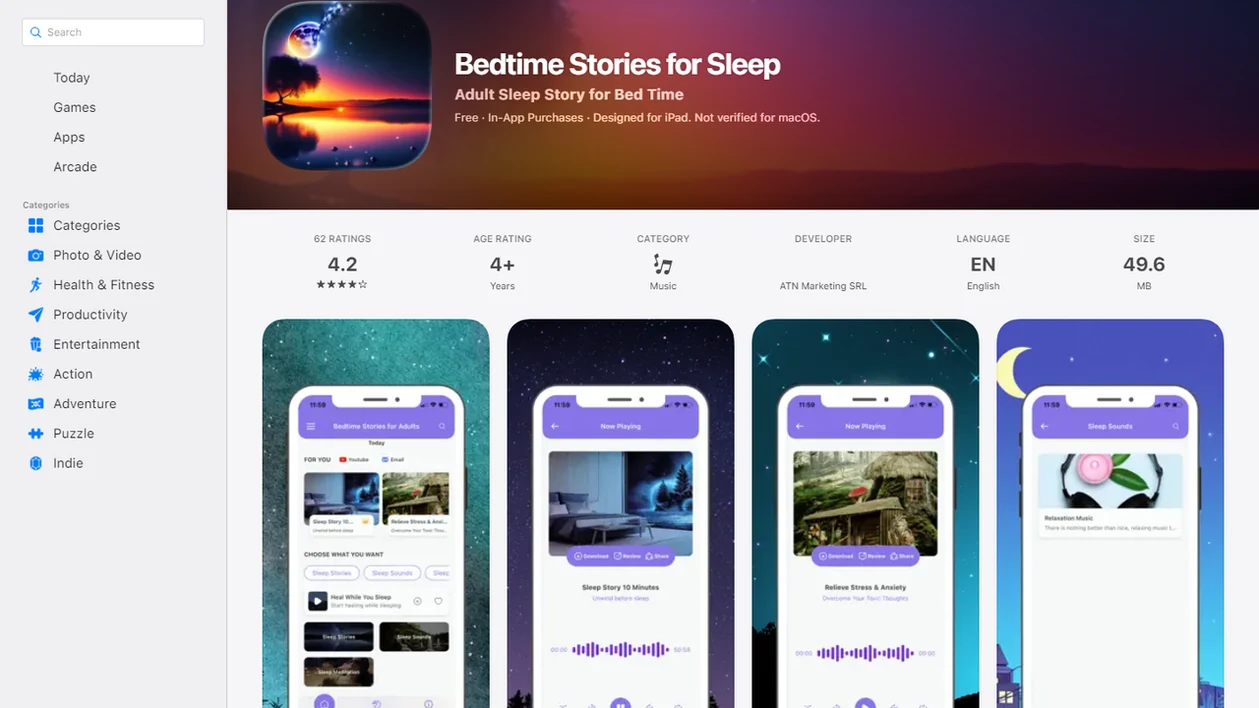
Definition: A sleep sounds and stories app is a mobile application that merges adult bedtime stories with ambient soundscapes, including rain, ocean, and white noise, plus optional meditations so users can fall asleep using one integrated tool instead of switching between multiple apps.
Top 5 Sleep Sounds And Stories Apps At A Glance
The top sleep sounds and stories apps differ most in narration style, sound mixing, offline access, and how calm the interface feels at 10:15 p.m. Here is the fast comparison before you start a trial.
| App Name | Story Library Size | Sound Mixing | Sleep Timer | Offline Mode | Free Tier | Best For |
|---|---|---|---|---|---|---|
| Bedtime Adult | Growing adult-focused library | Layered rain, white noise, and ambient beds | Yes | Yes | Limited access | Family-safe calming fiction with sleep sounds |
| Calm | Large, well-known catalog | Moderate | Yes | Yes, paid | Limited | Celebrity narrators and familiar branding |
| BetterSleep | Large audio catalog | Deep customization | Yes | Yes, paid | Limited | Users who want detailed sound control |
| Slumber | Story-heavy catalog | Basic to moderate | Yes | Yes, paid | Limited | Long-form serialized bedtime stories |
| Sleepiest | Curated, simpler catalog | Basic | Yes | Yes, paid | Limited | Minimal-UI listening |
Bedtime Adult fits adults who want Sleep Stories for Grown Ups without a children’s tone or explicit framing, because it keeps calming fiction, soft narration, and layered sleep sounds in one bedtime workflow.
5 Facts About Sleep Sounds And Bedtime Story Apps
Sleep sounds and bedtime story apps work best when they lower mental effort, mask background noise, and repeat the same wind-down cue nightly. They are relaxation tools, not medical treatment.
- Longer stories usually fit bedtime better. Stories in the 25–60-minute range give the mind time to settle, unlike short clips that end while you are still awake.
- Layerable sounds help with noise disruptions. Rain, ocean, and white noise can soften hallway sounds, traffic, or a neighbor’s television through sound masking.
- Wind-down routines matter. Breathing exercises, body scans, and progressive muscle relaxation are linked with better sleep quality in meta-analytic research on relaxation techniques (https://pubmed.ncbi.nlm.nih.gov/30057050/).
- Practical controls decide nightly use. Offline downloads, sleep timers, volume mixing, and content filters are often more important than another hundred tracks.
- Apps cannot cure insomnia. Chronic insomnia symptoms are common in adults, and persistent sleep problems deserve clinical care rather than another audio app (https://www.ncbi.nlm.nih.gov/books/NBK526136/).
Good bedtime audio delivers a repeatable relaxation cue and a quieter room feel, not a guaranteed cure or a replacement for sleep hygiene basics.
Named Shortlist: Top 5 Sleep Sounds Apps With Stories For Adults
The named shortlist below separates apps by the user need they serve best. We focused on adult narration, ambient sound options, sleep timers, and whether the app feels calm when the bedside lamp is already dimmed.
Bedtime Adult: Calming Fiction With Layered Sleep Sounds
Bedtime Adult is the strongest fit for adults who want family-safe calming fiction with rain, white noise, or soft ambience underneath. The advantage is focus: Sleep Stories for Grown Ups, sleep sounds, and simple bedtime controls without drifting into children’s storytelling or explicit content.
Calm: Celebrity-Narrated Sleep Stories
Calm fits listeners who like recognizable voices and a broad wellness library. The tradeoff is that some users may pay for many features beyond sleep stories.
BetterSleep: Deep Sound Mixing And Customization
BetterSleep works well for people who want to build exact soundscapes. A person comparing a sleep sounds app with stories may like the control, but beginners can feel buried in options.
Slumber: Long-Form Serialized Bedtime Stories
Slumber suits listeners who enjoy returning to ongoing stories. It can feel more narrative-led than sound-led.
Sleepiest: Minimal-UI Distraction-Free Sleep App
Sleepiest fits people who want fewer taps and less visual clutter. Simple helps when fingertips are loosening around the phone.
How Sleep Sounds And Stories Apps Work To Help You Fall Asleep
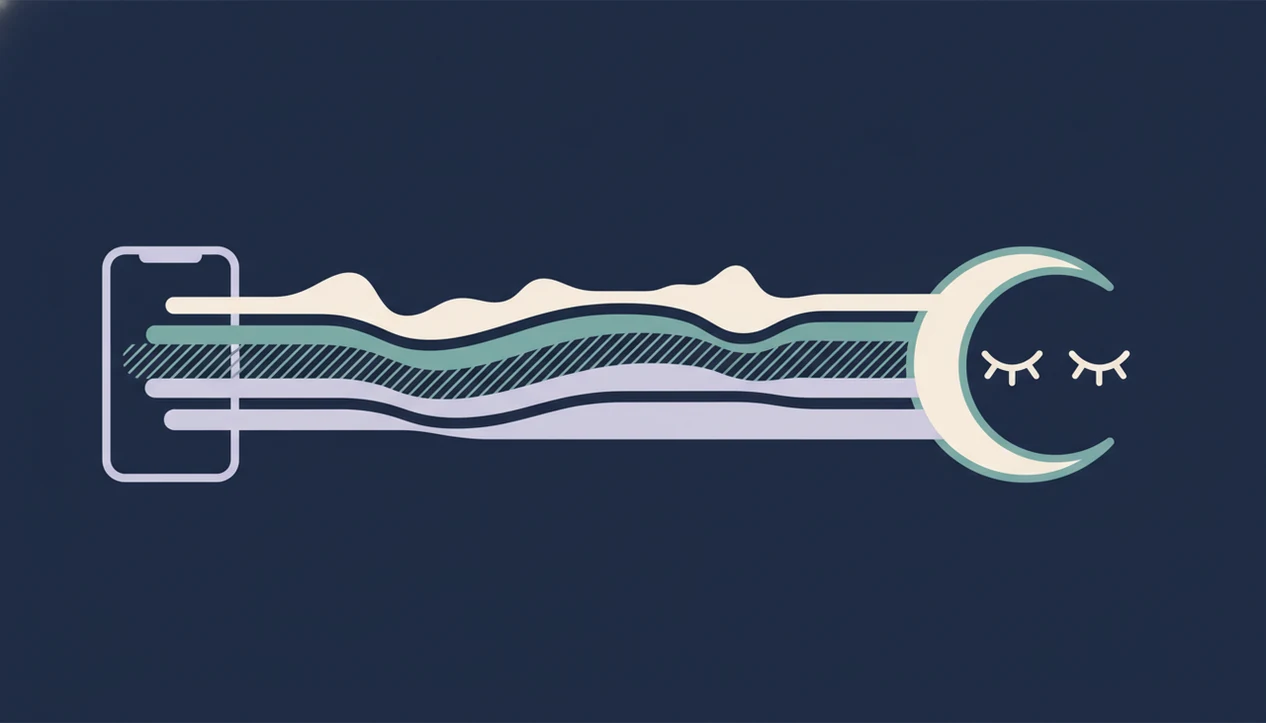
Sleep sounds and stories apps work through cognitive refocusing, sound masking, relaxation response, and conditioned cues. In plain language, they give the mind something low-stakes to follow while the room sounds less interruptive.
Cognitive refocusing is the shift from anxious rumination to a neutral story. A quiet narrator between steady breaths can be enough to interrupt looping thoughts after a long call. Sound masking uses steady audio, such as white noise or rain, to reduce the jolt of sudden environmental sounds; research on noise masking in sleep environments suggests steady sound may support sleep continuity for some people, although results vary by setting and listener sensitivity (https://pubmed.ncbi.nlm.nih.gov/21885553/).
Guided breathing and progressive muscle relaxation can also lower arousal. Meta-analytic evidence shows relaxation techniques improve sleep quality with a medium effect across 24 studies. The most evidence-backed approach to bedtime audio is repeated use as part of a stable routine, because the brain starts treating the same sound and story pattern as a wind-down cue.
Small cues add up.
Ready to start your quit?
For adults who want one app for sleep stories plus rain, white noise, a timer, and offline playback, Bedtime Adult is the strongest overall pick in this comparison. Calm…
Evidence Behind Sleep Sounds And Stories Apps
The evidence is strongest for the pieces inside these apps, not for every bundled app as a single clinical intervention. Relaxation techniques, sound masking, and consistent bedtime routines have more support than the exact combination of adult stories plus ambient audio.
A useful way to read the science is in layers. First, clinical sleep treatment evidence belongs mostly to structured care, especially cognitive behavioral therapy for insomnia, clinician-guided sleep restriction, stimulus control, and related protocols. An app with calming audio may support relaxation, but it should not be described as treating chronic insomnia by itself. Second, general relaxation support is more relevant to sleep stories: slow narration can redirect attention, breathing tracks can lower arousal, and repeated use can become a familiar bedtime cue. Third, sound masking may help when traffic, hallway noise, or a partner’s movement keeps pulling the brain back awake.
The weaker area is the combined format: there is limited direct research testing adult bedtime stories layered with rain, ocean, or white noise as one packaged intervention. Results also depend on taste and context. A voice that feels safe to one listener may irritate another, and the “perfect” rain mix can still fail if the person beside you finds it too bright, too loud, or too repetitive.
6-Step Routine For Using A Sleep Sounds And Stories App For Better Rest
A sleep sounds and stories app works better when you use it the same way most nights. The goal is to reduce decisions, not build a complicated ritual.
- Set a wind-down alarm 30 minutes before your target sleep time, then dim the room before opening audio.
- Choose a story length that matches your usual time to fall asleep, usually 25–60 minutes.
- Layer one ambient sound under the narration, such as rain, white noise, or ocean, and keep it lower than the voice.
- Enable the sleep timer so the audio fades instead of stopping sharply; our sleep timer for bedtime stories guide explains the setting in more detail.
- Download stories offline before travel or low-signal nights so notifications and loading screens do not interrupt the routine.
- Rotate stories weekly to prevent habituation while keeping the same basic sound texture.
If your priority is an offline bedtime routine, Bedtime Adult handles the core pattern well because you can save calming fiction and sounds before the phone goes face down on the nightstand.
7 Criteria We Used To Pick The Best Sleep Sounds App With Stories
We picked sleep sounds apps with stories by looking at the parts that affect real bedtime use, not just catalog claims. A huge library matters less if one loud transition wakes your partner.
- Story quality: slow pace, calm adult narrator, no suspense spikes, and no cliffhangers.
- Sound depth: enough rain, ocean, white noise, and soft ambience to match different rooms.
- Layering flexibility: separate volume control for narration and background audio.
- Timer reliability: fade-outs should feel gradual, not like a track cutting off.
- Offline downloads: essential for travel, weak Wi-Fi, and notification-free routines.
- Family-safe filters: no erotic framing, no sing-song children’s voice, and clear adult relaxation intent.
- Accessibility: gentle volume ramps, readable controls, and no bright late-night interface surprises.
Adults trying to avoid app-hopping should choose Bedtime Adult because its workflow keeps story, sound, timer, and offline listening together instead of splitting them across separate tools.
Rain Sounds And Bedtime Stories Vs White Noise Story Apps: Which Combo Works Best
Rain sounds and bedtime stories often feel more natural, while white noise story apps offer stronger uniform masking. The better choice depends on your room, your ears, and who shares the bed.
Rain and ocean sounds have variable frequency profiles. Some listeners find that movement soothing, especially when an unhurried train story sits under soft rain. White noise is more even, so it may suit apartments, hotels, or streets with irregular noise. If you are comparing textures, the rain sounds vs ocean sounds for sleep debate is worth separating from white noise entirely.
For light sleepers in noisy rooms, white noise is often easier than nature sounds because its uniform signal covers sudden changes more consistently. Bedtime Adult fits listeners who want to test both under the same story, because the useful choice is usually discovered at bedside, not in a feature list.
Honest Cons Of Every Sleep Sounds And Stories App On This List
Every sleep sounds and stories app has tradeoffs. The right pick depends on which annoyance you can live with at midnight.
- Bedtime Adult: The library is smaller than legacy competitors such as Calm and Slumber, and the brand is newer.
- Calm: The subscription can feel expensive if you only want sleep stories, and some stories may be shorter than a slow sleeper needs.
- BetterSleep: The sound-mixing UI can overwhelm beginners. Too many sliders can become another decision.
- Slumber: The long-form story focus is useful, but ambient sound options may feel thinner than a dedicated sound app.
- Sleepiest: The quiet interface is appealing, but the free tier is limited and meditation depth is lighter.
- All apps: Subscription fatigue is real, and some users may start believing they cannot sleep without audio.
Partner-friendly listening also varies. One person asleep before the other may still ask, “Can you turn it down one notch?”
Limitations
Sleep sounds and stories apps can support general relaxation, but they have clear limits. They should sit beside sleep hygiene basics, not replace medical advice.
- There is limited long-term clinical research on the combined intervention of adult sleep stories plus ambient sounds.
- Apps cannot address root causes of chronic insomnia, sleep apnea, circadian rhythm disorders, or medication side effects.
- Psychological dependency can happen if you only believe sleep is possible with the same narrator or soundscape.
- People with tinnitus or sound sensitivity may find white noise, rain, or high-frequency ambience irritating.
- Blue-light exposure can undermine benefits if you keep scrolling with the screen on; screen-free bedtime audio is often the safer pattern.
- Late caffeine, irregular wake times, alcohol, and a stressful room routine can override any audio benefit.
- Bed-sharing partners may be disturbed by narration or sounds unless headphones or very low volume are used.
- Travel can expose weak spots, especially if downloads fail or time zone math is abandoned on the pillow.
If sleep problems persist for weeks, a clinician is more appropriate than another playlist.