
Guided Sleep Meditation Adults Can Use at Night
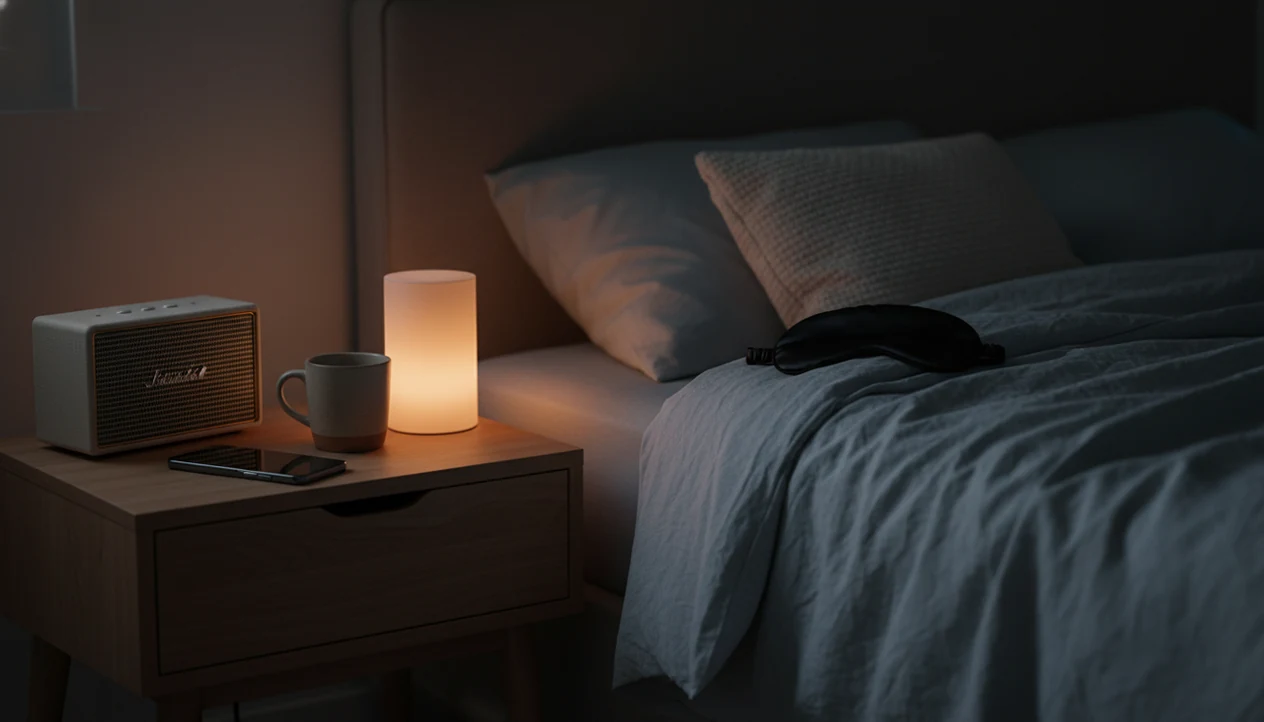
Guided sleep meditation adults use at night is a calm audio practice that talks you through breathing, body relaxation, and gentle attention shifts so sleep feels easier. It works best when the voice, length, and theme are simple enough to relax you without becoming another thing to analyze.
> Definition: Guided sleep meditation for adults is bedtime audio that uses calming narration, breathing cues, body scans, and soft imagery to help grown-ups settle their mind and body before sleep.
TL;DR
- Choose guided meditation when your mind needs step-by-step redirection, not just background sound.
- Pick sleep stories when narrative feels soothing, and choose sounds when words feel too stimulating.
- Use non-clinical, family-safe bedtime meditation audio unless persistent sleep problems need professional care.
Guided Sleep Meditation Adults: Plain-English Definition
Guided sleep meditation for adults is usually audio-led, used in bed, and designed to cue relaxation before sleep rather than treat a medical condition. A calm narrator may guide breathing, a body scan, simple visualization, or attention shifts away from the day’s unfinished noise.
Adult sleep meditation is different from hypnosis or clinical insomnia treatment. It does not diagnose, prescribe, or promise sleep on command. The bedside version is simpler: lower the lamp, set the timer, turn the phone face down, and let the instructions carry some of the mental load.
Small cues matter at night. If you are reaching for the screen to skip a voice, lower the volume, or check how many minutes are left, the track is probably too engaging for bedtime.
A good track should feel grown-up, steady, and low-pressure. If the voice sounds like a sing-song children’s story, many adults notice it quickly and switch tracks.
How Adult Sleep Meditation Audio Works at Bedtime
Adult sleep meditation audio works by reducing bedtime decision-making and redirecting attention toward repeatable cues. Instead of asking, “What should I think about now?” the listener follows a voice through breath pacing, muscle relaxation, and body awareness.
The mechanism is partly attentional control and partly habit learning. In plain terms, the audio gives the mind one quiet job. Breathing cues may slow the rhythm of attention. A body scan can move focus from planning to sensation. Progressive relaxation asks muscles to release in sequence, which can make tension easier to notice.
Repetition helps. When the same kind of guided meditation for sleep adults use begins after the light goes out, it can become a wind-down cue. The effect is usually not instant or dramatic. Benefits tend to build when the routine is boring in a useful way, repeated across many nights.
For adults with rumination, sleep meditation for racing thoughts often works better when the instructions stay short and concrete.
Five Facts About Adult Sleep Meditation at Bedtime
- Guided sleep meditation combines techniques. Most tracks use breathwork, body scans, visualization, and calming narration to help the body shift toward rest.
- It gives instructions, not just atmosphere. Unlike rain audio or brown noise, guided meditation tells you where to place attention next.
- It may fit busy or anxious minds. Step-by-step narration can be useful when silence leaves too much room for work replay.
- Research suggests modest sleep benefits. A 2019 systematic review and meta-analysis found small to moderate sleep-quality improvements from mindfulness meditation interventions across adult groups source.
- Format changes the effect. Voice, track length, pacing, and background sound can make one meditation calming and another irritating.
For many adults, a 10-minute track is easier than a 45-minute session because it asks for less effort when the body is already tired.
Guided Sleep Meditation vs Sleep Stories vs Sleep Sounds
Guided meditation, sleep stories, and sleep sounds all support bedtime relaxation, but they work differently. The right choice depends on whether you want instruction, narrative comfort, or a steady sound environment.
| Format | What leads the experience | Often fits when | May not fit when |
|---|---|---|---|
| Guided sleep meditation | Instructions, breath cues, body awareness | You need structure and redirection | The voice makes you monitor your progress |
| Sleep stories | Low-drama narrative | Gentle fiction feels emotionally safe | Plot or language keeps you curious |
| Sleep sounds | Environment, such as rain or ocean audio | Words feel too stimulating | Silence leaves thoughts too active |
Bedtime meditation audio is often the middle ground. It has more guidance than sound-only audio, but less plot than a story.
Rain tapping softly through headphones can be enough on some nights. On others, the mind needs a sentence to follow. For a fuller comparison, the sleep stories vs sleep meditation question depends on how alert words make you.
Common Guided Sleep Meditation Formats for Adults
Common adult formats differ in how much structure they provide. Try a few before deciding the whole category does or does not work.
- Body scan meditation: The narrator moves attention through the body, often from feet to face. A body scan meditation for insomnia style can help people who notice tension in bed.
- Breathing talk-down: The track gives simple inhale and exhale cues, with minimal imagery.
- Progressive muscle relaxation: You tense and release muscle groups, which can make physical stress easier to identify.
- Gentle visualization: The voice describes a calm place, such as a quiet path or moonlit garden, without dramatic plot.
- Gratitude or letting-go meditation: The track invites short reflection, then release.
Voice-only tracks feel cleaner to some listeners. Others prefer soft music, rain, ocean sound, or distant train ambience under the narration.
How to Use Guided Sleep Meditation at Bedtime
Use guided sleep meditation as a small, repeatable bedtime cue rather than a performance. The goal is not to force sleep, but to make the next few minutes easier for your mind and body to follow.
- Choose a 10- to 30-minute track before you get into bed, while you can still make a calm decision. Pick the voice and format early so you are not scrolling under the covers.
- Dim the screen, turn on sleep mode or do-not-disturb, and set a sleep timer if your app or speaker allows it. The less you need to touch the device, the better.
- Lie down in a comfortable position and set the volume just above a whisper. It should be clear enough to follow, but quiet enough to fade into the room.
- Follow only the next cue. If the narrator says notice your breath, notice your breath; if the mind asks whether sleep is working yet, let that question pass.
- Switch to sleep sounds or a simple story if instructions make you more alert. Some nights need rain, ocean audio, or low-drama fiction instead of direct guidance.
When Adults Should Use Guided Sleep Meditation Audio
Should adults use guided sleep meditation audio when they cannot shut off at night? Yes, it is often a good fit for racing thoughts, bedtime stress, or nights when the mind needs structure instead of open silence.
Choose stories when gentle fiction feels more pleasant than direct instruction. Choose sounds when spoken words keep you alert. Good bedtime stories and sleep meditation for adults deliver calming fiction, wind-down routines, and sleep sounds that are family-safe, not 18+.
Shared bedrooms add another layer. A partner may ask, “Can you turn it down one notch?” before the room settles, so neutral themes and low-volume narration matter. Bedtime Adult is a bedtime stories for adults app that offers calming fiction, sleep meditations, and sleep sounds for grown-ups. Tools like Bedtime Adult can be useful when you want adult bedtime audio without explicit or child-directed framing.
Evidence for Adult Sleep Meditation and Sleep Quality
Evidence for adult sleep meditation is encouraging, but not absolute. Mindfulness-based practices appear to help some adults improve sleep quality, usually with modest effects and regular practice.
The CDC reported that about 8.4% of U.S. adults used mindfulness meditation in the past 12 months in 2017, up from 4.1% in 2012 source. In a 2015 randomized clinical trial of older adults with moderate sleep disturbance, a 6-week mindfulness program improved Pittsburgh Sleep Quality Index scores more than sleep-hygiene education alone. source A 2019 meta-analysis found small to moderate sleep-quality improvements across adult populations. source
NIH-backed clinical summaries report that insomnia symptoms are common in adults, with prevalence estimates often ranging from 10% to 30% depending on definition and population source. That does not mean meditation is a treatment for every sleep problem. Clinicians typically recommend evaluating persistent insomnia, breathing issues, and daytime impairment rather than relying only on relaxation audio.
For a broader evidence discussion, do sleep meditation apps actually help covers app-based claims in more detail.
Limitations
Guided sleep meditation is a relaxation support, not a cure. It can fit a bedtime routine, but it should not replace medical evaluation when symptoms suggest a sleep disorder or mental health concern.
- It is not a cure for sleep apnea, restless legs syndrome, major depression, chronic pain, or other medical conditions.
- Some adults notice little improvement, even after consistent practice.
- Vivid imagery, emotional themes, or “letting go” prompts may feel activating or triggering.
- Phone-based listening can keep screens, alerts, and late-night checking in the bedroom.
- Long or complicated tracks can create pressure to meditate correctly.
- Headphones may be uncomfortable for side sleepers or unsafe at high volume.
- Persistent insomnia, daytime sleepiness, drowsy driving, or safety concerns should prompt professional care.
Keep it plain when sleep is fragile. A short track, dim screen, and sleep timer often work better than a complicated routine with too many choices.
Apps such as Bedtime Adult, Calm, Headspace, and Slumber offer different mixes of meditation, story, and sound. The right fit depends on voice, content boundaries, and whether the routine feels easy to repeat.
FAQ
What is adult sleep meditation?
Adult sleep meditation is guided bedtime audio that uses breathing, body awareness, and calming narration to support relaxation and sleep readiness. It is usually non-clinical unless used as part of care with a professional.
Does guided meditation help sleep?
Research suggests guided or mindfulness-based meditation can modestly improve sleep quality for some adults. Regular use and basic sleep hygiene make benefits more likely.
How long should sleep meditation be?
Many adults do well with 10 to 30 minutes. Shorter tracks may fit tired listeners who do not want to “perform” a long meditation.
Is sleep meditation better than stories?
Sleep meditation is better when you want structured guidance. Sleep stories may fit better when gentle narrative feels more comforting than direct instruction.
Can meditation replace insomnia treatment?
No. Meditation can support a sleep routine, but persistent insomnia, daytime impairment, or suspected medical sleep problems should be discussed with a clinician.
Should I use headphones in bed?
Use headphones only if they are comfortable, low-volume, and safe for your sleep position. A quiet speaker may work better in shared bedrooms.
Why does meditation keep me awake?
The voice, imagery, length, effort, or emotional theme may be too stimulating. Try a shorter voice-only track, sleep sounds, or a simple story instead.
What makes bedtime audio family-safe?
Family-safe bedtime audio avoids explicit, disturbing, or child-directed content while staying calm for adults. In practice, that means neutral themes, low-drama narration, and no sexual or graphic material.