
Bedtime Routine Timeline: What to Expect Week by Week
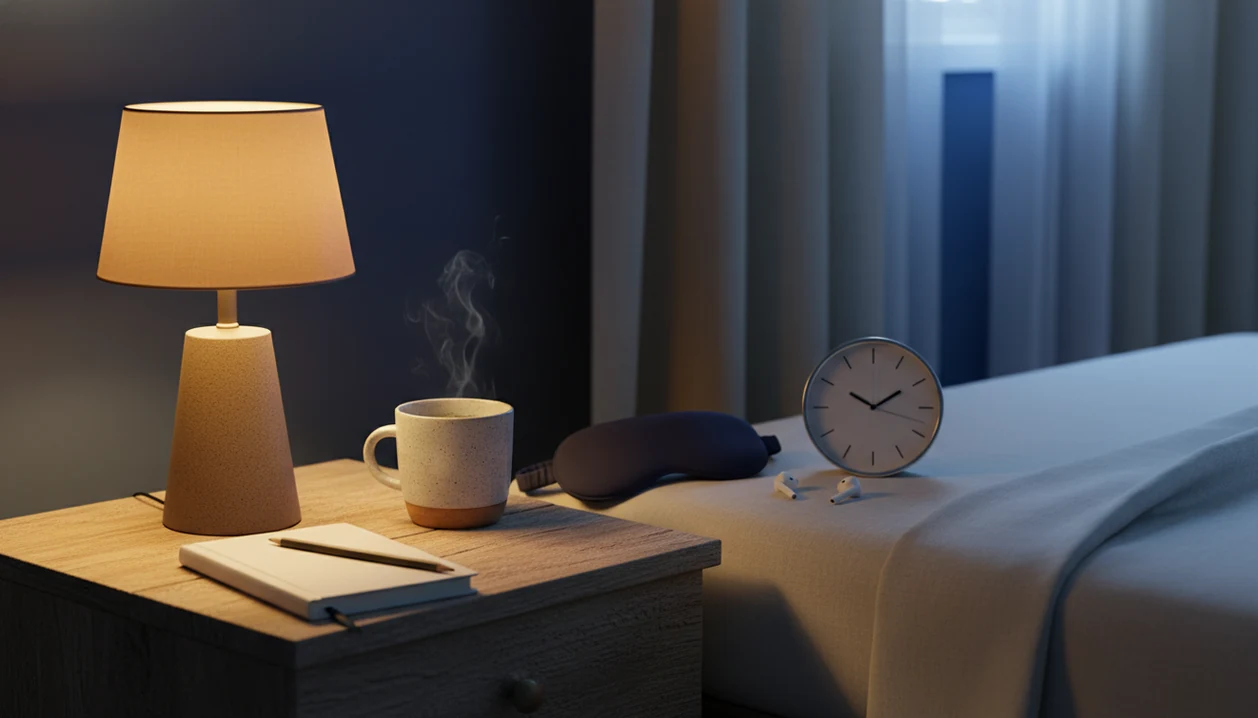
A bedtime routine timeline usually feels awkward for the first few nights, easier after 1–2 weeks, and more automatic after several weeks of consistent low-stimulation habits. The goal is not to force sleep instantly, but to repeat the same wind-down cues so your brain starts treating calming audio, dim light, and a predictable order as signals that sleep is coming.
Definition: A bedtime routine timeline is the ordered evening schedule of calming behaviors, usually starting 1–2 hours before bed, that helps adults transition from daytime alertness to sleep readiness.
TL;DR
- Most adults should start a wind down timeline 1–2 hours before bed, with 30–60 minutes reserved for low-stimulation activities.
- A bedtime audio habit often takes several nights to feel familiar and a few weeks to become a strong sleep cue.
- Short routines can still work: 10–20 minutes of consistent audio-based wind down is better than an ambitious routine you cannot repeat.
Bedtime Routine Timeline Results by Week
A bedtime routine timeline usually changes in stages: awkward at first, easier after repeated nights, and more automatic after several weeks. The cue matters more than a single perfect night.
Nights 1–3: The routine feels new
The first few nights may feel staged. You might dim the lamp at 10:15 p.m., set the audio, and still think about tomorrow’s inbox. That does not mean the routine failed. The brain has not yet linked the order with sleep readiness.
Days 4–10: The sequence feels easier
By the second half of the first week, the routine often requires less deciding. Phone face down. Timer set. Same order. Less negotiation with yourself.
Weeks 2–4: The audio cue strengthens
Weeks 2–4 are when bedtime audio may start to feel like a stronger wind-down cue. Long-term results still depend on schedule consistency, caffeine timing, screens, stress, and the bedroom itself. For many adults, a repeatable routine is easier than willpower because the evening has fewer choices.
Five Bedtime Habit Timeline Facts Adults Should Know
These five bedtime habit timeline facts are the practical baseline for adults building a sleep routine timeline. They are useful because they separate realistic habit-building from instant-sleep expectations.
- Adults aged 18–60 are recommended by the American Academy of Sleep Medicine and Sleep Research Society to get 7 or more hours of sleep per night (https://jcsm.aasm.org/doi/10.5664/jcsm.4758).
- In a 2019 CDC analysis, 35.3% of U.S. adults reported short sleep duration, meaning less than 7 hours on average (https://www.cdc.gov/sleep/data-research/facts-stats/adults-sleep-facts-and-stats.html).
- A sleep routine timeline usually works best when it begins 1–2 hours before bed, with the calmest block saved for the final 30–60 minutes.
- Bedtime audio should sit at the same point in the routine most nights so the sound becomes part of the cue, not a random add-on.
- Caffeine, alcohol, dinner timing, late alerts, and screen exposure can weaken the routine before it even begins.
The pocket check is real.
If your evenings are tight, a 10-minute bedtime routine for adults can still build the habit better than a long plan you abandon.
How a Sleep Routine Timeline Works in the Brain
A sleep routine timeline works by repeating cues until the brain starts associating the same evening sequence with sleep readiness. In behavioral terms, this is a conditioned association: the cue does not cause sleep by force, but it helps lower alertness when repeated in the same context.
Low light, reduced novelty, and predictable audio all reduce cognitive load. That means fewer new decisions at the exact time your mind should be stepping down. Clinicians typically recommend behavioral sleep strategies such as stimulus control and consistent sleep timing when addressing insomnia symptoms, though persistent problems need proper evaluation. The American Academy of Sleep Medicine guideline identifies cognitive behavioral therapy for insomnia as the recommended first-line treatment for chronic insomnia, which is different from using bedtime audio for general wind-down support (https://jcsm.aasm.org/doi/10.5664/jcsm.8986).
Research on behavioral sleep interventions supports structured routines and stimulus control. Mindfulness and relaxation audio also have evidence for improving sleep quality in some adults, including a JAMA Internal Medicine randomized clinical trial of a mindfulness awareness program in 49 middle-aged and older adults with moderate sleep disturbance (https://jamanetwork.com/journals/jamainternalmedicine/fullarticle/2110998).
How to Use a Wind Down Timeline With Bedtime Audio
To use a wind down timeline with bedtime audio, place the audio at a repeatable point near the end of the evening. The routine should be simple enough to survive late meetings, travel nights, and the one sock missing from the laundry basket.
- Set a target bedtime and work backward 60–90 minutes from lights out.
- Lower stimulation by dimming lights, closing work tabs, and avoiding high-alert shows or messages.
- Prepare the room with water, charger, alarm, and any white noise before you get into bed.
- Start audio consistently during the final 20–30 minutes, using a story, meditation, or sound loop.
- Repeat the same order most nights instead of rebuilding the routine from scratch.
- Keep a fallback version for late nights, such as washing up, dimming lights, and playing 10 minutes of calm audio.
For busy evenings, a 30-minute bedtime routine after work can be more repeatable than a long checklist. Shoulders loosening out of work clothes is a cue too.
Sample 90-Minute Bedtime Routine Timeline for Adults
A 90-minute bedtime routine timeline gives screens, hygiene, and audio a clear place. It also leaves room for ordinary life, such as finding the charger beside a water glass or asking a partner to turn the volume down one notch.
| Time before bed | What to do | Why it helps |
|---|---|---|
| 90 minutes | Stop work tasks, heavy planning, and intense media. | Reduces problem-solving and emotional activation. |
| 60 minutes | Dim lights, prepare the bedroom, and start hygiene steps. | Signals a shift from daytime pace to lower stimulation. |
| 30 minutes | Start calming fiction, sleep meditation, or gentle sleep sounds. | Places audio where the brain can learn the cue. |
| 10 minutes | Reduce interaction and let audio continue or fade out. | Keeps the final stretch quiet and predictable. |
| Lights out | Keep the room dark, cool, and low-interruption. | Protects the routine from avoidable stimulation. |
Tools like Bedtime Adult can fit the 30-minute slot when you want family-safe adult bedtime stories, meditations, and sounds in one place.
Audio Choices in a Bedtime Habit Timeline
Audio choices work best when they match the obstacle: thoughts, tension, or the room environment. Bedtime stories and sleep meditation for adults deliver calming fiction, wind-down routines, and sleep sounds, family-safe, not 18+.
Calming fiction for mental chatter
Bedtime stories are useful when racing thoughts need a gentle narrative track. Choose low-drama plots, soft narration, and scenes that do not demand analysis, like a moonlit garden described in calm detail.
Sleep meditation for body tension
Sleep meditation fits nights when stress sits in the jaw, shoulders, or chest. A body scan gives attention somewhere steady to land.
Sleep sounds for environmental consistency
Sleep sounds help when silence feels too loud or the room has uneven noise. Soft rain, brown noise, and distant train ambience feel different, so change sounds that keep you alert.
A dedicated bedtime stories for adults app can combine calming fiction, sleep meditations, and sleep sounds for grown-ups. The grown-up framing matters because the voice should sound adult, not sing-song or childish.
Common Bedtime Routine Timeline Myths
“Should bedtime audio knock me out on night one?” No. A bedtime routine timeline usually needs repetition before audio becomes a reliable wind-down cue.
A few myths make adults quit too early:
- Myth: audio should work immediately. The first nights often feel mechanical because the habit is still new.
- Myth: longer routines are always better. A 20-minute routine you repeat beats a 90-minute plan you resent.
- Myth: sleep stories cancel out late scrolling. Late alerts and bright screens can keep the brain on call.
- Myth: routines are only for insomnia. Many adults use routine simply to lower stimulation and protect bedtime.
Consistency and low stimulation matter more than perfection. For a longer adoption window, the 2 weeks bedtime routine guide explains what may change after the first few nights.
Limitations
A bedtime audio routine can support general relaxation, but it is not medical treatment. It should not be used as a substitute for evaluation when sleep problems are persistent, severe, or linked with daytime impairment.
- A routine is not a treatment for sleep apnea, restless legs syndrome, chronic insomnia, or other medical sleep disorders.
- Shift work, chronic pain, caregiving, outside noise, and high stress can reduce the effect of any bedtime habit timeline.
- Adult bedtime story research is limited compared with broader meditation, relaxation, and behavioral sleep research.
- Some people find certain narrators, plots, whispers, or soundscapes stimulating rather than calming.
- Occasional inconsistency is normal, but a constantly changing sleep schedule makes results harder to notice.
- Alcohol may feel relaxing at first, but it can still disrupt sleep quality later in the night.
- Readers with persistent insomnia symptoms, loud snoring, breathing pauses, or major daytime sleepiness should consider professional evaluation.
If worry is the main barrier, a night anxiety wind-down may need more structure than audio alone.
FAQ
How long should wind down take?
Many adults do well with 30–60 minutes of low-stimulation wind down. On busy nights, 10–20 minutes can still help if the order is consistent.
When should screens stop?
Reduce screens and alerts before the audio portion when possible. A practical target is 30–60 minutes before bed, especially for work messages and high-alert media.
Do bedtime stories really help?
Calming stories may help by redirecting attention away from planning and rumination. Results depend on consistency, narrator style, plot intensity, and where the story sits in the routine.
When should audio start?
Audio often fits best during the final 20–30 minutes before sleep. Place it at the same point nightly so it becomes a predictable cue.
How many nights until it works?
Familiarity may build within several nights. A stronger bedtime habit often takes a few weeks of repeated use.
Can routines work on weekends?
Weekend routines can work when bedtime and wake time do not shift dramatically. Large schedule swings make the routine harder to read as a sleep cue.
What ruins a bedtime routine?
Common disruptors include late caffeine, alcohol, heavy meals, late screens, stress, noise, and inconsistent bedtimes. The routine works better when earlier evening choices support it.
Is meditation better than stories?
Meditation often fits body tension and stress, while stories fit racing thoughts. Sleep sounds are useful when the main problem is silence or inconsistent room noise.