
Sleep App Privacy: What Adults Should Check Before Bed
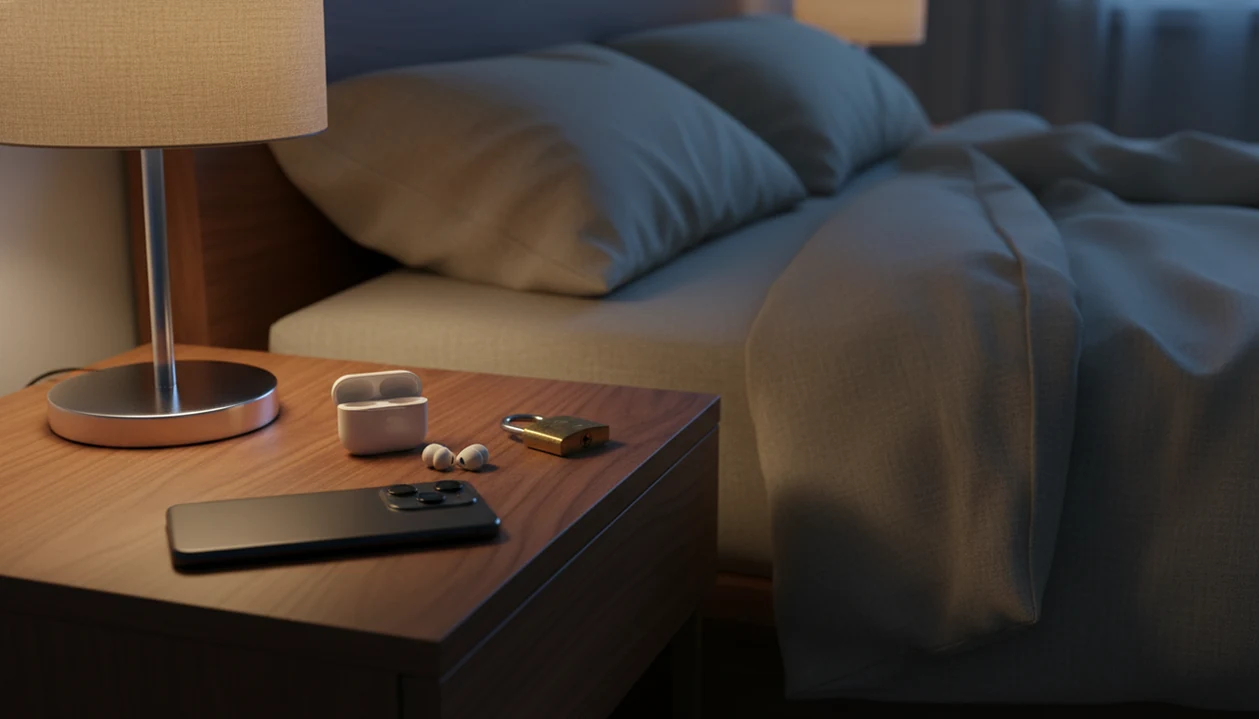
Sleep app privacy matters because a bedtime app can reveal when you sleep, what you listen to, whether you use a microphone, and sometimes device or location clues. Before using any sleep app, check its permissions, data sharing language, advertising settings, encryption claims, and whether the core bedtime content works without tracking.
> Definition: Sleep app privacy is the set of choices, policies, permissions, and safeguards that determine what a sleep app collects about your nights and how that information is stored, shared, sold, or deleted.
TL;DR
- Most consumer sleep apps are not automatically protected like medical records, so treat sleep data as sensitive personal data.
- Microphone, motion, Bluetooth, contacts, and location permissions are often unnecessary for audio-only bedtime stories or sleep meditations.
- A private sleep app should explain what it collects, limit third-party sharing, offer opt-outs, and let you use the main sleep content with minimal permissions.
Sleep App Privacy Checks for Bedtime Audio Apps
The fastest sleep app privacy check is simple: ask what the app needs to know for you to hear audio in bed. Sleep data can reveal intimate routines, household patterns, travel nights, and when the room finally goes quiet.
Start with permissions, third-party sharing, advertising analytics, encryption, deletion controls, and account requirements. If a bedtime story app asks for microphone, precise location, contacts, or constant motion access, pause before tapping “allow.” A phone turned face down on a nightstand with the sleep timer already set should not need to become a sensor hub.
Bedtime story and meditation apps can often work with fewer permissions than sleep-tracking apps because they play audio instead of estimating sleep stages. Audio-only bedtime apps fit this lower-permission category when they focus on playback instead of sleep measurement.
For bedtime audio users, denying sensitive permissions first is often safer than accepting every prompt because the core experience is usually playback, not measurement.
Five Sleep App Data Privacy Facts Adults Should Know
- Most consumer sleep apps are not automatically HIPAA-covered. Unless the app is connected to a covered healthcare provider, sleep data is usually treated more like consumer data than a medical record.
- Sleep apps may collect more than sleep times. Common data can include wake times, listening history, mood notes, microphone recordings, device IDs, analytics events, and sometimes location clues.
- A 2019 analysis found broad server transmission. In a review summarized in a 2021 paper, all 24 sleep-tracking apps studied transmitted data to remote servers, and 67% shared data with third parties source.
- Health apps often share data with ad and analytics services. A broader health-app study found 79% of sampled apps shared user data with third parties, with 67% sharing with advertising and analytics services source.
- Turning off sensors can reduce exposure. Microphone, motion, and location permissions are often unnecessary for audio-only bedtime stories or sleep meditation.
The pocket check is real.
Sleep App Data Flows Behind the Scenes
Sleep app data flows usually begin with a sensor, a tap, or a listening choice, then move into local storage, cloud servers, analytics tools, advertising systems, or business partners. In plain terms, the app may turn bedtime behavior into records that can be stored, processed, and shared.
Here is how sleep app privacy works at the mechanism level. Sleep-tracking apps may use microphones, accelerometers, wearables, or sleep-stage algorithms to infer rest patterns. Audio-only apps can play soft narration, brown noise, distant train ambience, or rain without measuring your breathing or movement. Those are different designs, and they create different privacy risks.
“De-identified” or aggregated data can still feel personal because sleep timing maps daily life. A red-eye cabin with the lights dimming overhead says something different from a usual 10:15 p.m. bedside routine. Privacy depends on app design, but it also depends on user settings.
Calming fiction, wind-down routines, and sleep sounds deliver family-safe bedtime audio for adults, not clinical diagnosis or 18+ content.
Sleep App Permissions Worth Reviewing First
Deny sleep app permissions first, then enable only the ones tied to a feature you actually want. A private sleep app for bedtime stories or meditation should not need microphone, contacts, precise location, or constant motion access for core audio playback.
| Permission | Why it may be requested | Privacy concern | Usually needed for audio-only bedtime use? |
|---|---|---|---|
| Microphone | Snore detection, breathing sounds, sleep talking, sound recording | May capture sensitive night audio | No |
| Motion sensors | Sleep movement estimates | Can infer restlessness and sleep timing | No |
| Bluetooth | Wearables, speakers, trackers | May reveal connected devices | Sometimes |
| HealthKit or Google Fit | Health and sleep integrations | Combines sleep data with broader health data | Optional |
| Location | Weather, travel, ads, personalization | Reveals home, hotel, or routine clues | Rarely |
| Notifications | Bedtime reminders | Shows app use patterns | Optional |
| Contacts | Sharing features | Exposes social graph | No |
| Storage | Downloads, recordings, exports | May retain files or audio | Sometimes |
| Background activity | Tracking or continued playback | Lets the app run after screen-off | Sometimes |
A partner asking, “Can you turn it down one notch?” is a normal bedtime problem. Contact access is not.
Private Sleep App Policy Guarantees to Look For
A private sleep app policy should make specific promises about collection, sharing, security, deletion, and permissions. Vague lines like “we value your privacy” are weaker than plain limits on what the app will not collect or share.
- Data minimization: The policy says the app collects only what is needed for playback, account support, subscriptions, or requested features.
- No sale of personal data: The app clearly addresses sale, sharing, targeted advertising, and opt-out controls.
- Limited advertising tracking: Analytics and ad tools are named or described, not hidden behind “trusted partners.”
- Encryption in transit and at rest: The policy explains protection during transfer and storage, not just “secure systems.”
- Deletion rights: Users can delete accounts, logs, recordings, or exported data through settings or a privacy contact.
For privacy, the safer pattern is low-permission listening: calming fiction, sleep meditations, and sleep sounds should work without microphone, contacts, or precise location.
Account-free or low-data listening is a privacy advantage when available. A bedtime app that plays a low-drama story behind closed eyes does not always need a full profile.
Sleep App Data Privacy Red Flags in Policies
“What sleep app privacy red flags should I look for in a policy?” Look for broad third-party sharing, undefined business partners, advertising networks, data brokers, vague research use, unclear retention periods, and weak or missing encryption language.
Be especially cautious when an app collects sensitive audio or wellness data without saying where it is stored, how long it is kept, or who can access it. Security research cited in a 2021 sleep app review found that some apps stored unencrypted audio recordings of users’ sleep sounds in ways other apps with storage and internet permissions could access.
Remote server storage is not automatically bad. Many apps need servers for accounts, downloads, subscriptions, sync, or support. But once bedtime data leaves your phone, transparency matters more. The policy should explain security controls, deletion options, and whether data goes to advertisers, analytics vendors, or research partners.
If you are specifically worried about sale or sharing language, our guide to do sleep apps sell my data breaks down those terms.
Common Sleep App Privacy Myths
- Myth: Sleep apps are protected like doctor records. Reality: most consumer sleep apps are not HIPAA-covered unless tied to a covered healthcare provider.
- Myth: Meditation and bedtime story apps are harmless. Reality: even non-tracking apps may collect analytics, device identifiers, listening history, and usage data.
- Myth: Free apps cannot do much with data. Reality: free apps may rely more on advertising, analytics, or partner sharing than paid apps.
- Myth: Turning off notifications protects privacy. Reality: permissions, sharing settings, account settings, and policy terms matter more.
- Myth: A calm narrator means a private app. Reality: the voice may be gentle, but the app’s data practices live in permissions, settings, and policy language.
Soft narration can be a useful wind-down cue. It is still software.
For people choosing bedtime audio in shared rooms, family-safe adult sleep stories are a content question; privacy still requires a separate settings review.
Sleep App Privacy Settings Adults Should Check
Check phone-level permissions before relying on in-app toggles. On iPhone or Android, review microphone, motion, Bluetooth, location, notifications, background activity, and health integrations for each sleep app.
Then open the app itself. Look for settings covering personalized ads, analytics, crash reporting, data sharing, email marketing, health integrations, and downloaded content. If the app stores recordings, logs, sleep notes, or exported health data, delete old items you no longer need. An airport hotel pillow with stiff corners is not the place to wonder whether last month’s sound recordings are still sitting in an account.
Set a calendar reminder to recheck privacy settings after major updates, policy changes, or acquisitions. App permissions can reset in confusing ways after redesigns, and privacy menus sometimes move.
For most adults, the practical privacy routine is to review phone permissions first, then app settings, then stored data, because each layer controls a different kind of exposure.
Sleep App Privacy Boundaries for Medical Accuracy and Security
- Privacy-friendly does not mean medically validated. A low-data app can still make weak sleep claims, so privacy and accuracy should be judged separately.
- Consumer sleep apps often lack evidence. A 2021 review of 73 sleep apps found that only 32.9% had empirical evidence supporting claims, and 15.8% involved clinicians in development.
- Remote servers always carry some risk. Encryption and good security reduce exposure, but they cannot promise zero breach risk.
- Sleep audio is not clinical care. Adults with persistent insomnia, suspected sleep apnea, gasping, dangerous daytime sleepiness, or serious symptoms should consult a qualified clinician.
- Medical claims deserve extra caution. If an app says it can diagnose, treat, or cure a sleep disorder, review the evidence and the privacy policy together.
Clinicians typically recommend evaluation for persistent insomnia symptoms or suspected sleep apnea rather than relying on consumer app readings alone. Our explainer on when to see a doctor for insomnia covers that boundary in more detail.
Sleep App Privacy Rights Requests and Deletion Contacts
To request sleep data deletion, find the privacy contact, data protection officer, support email, or in-app help channel listed in the app’s privacy policy. Ask direct questions and save a copy of the request and response.
Useful questions include: what sleep data is stored, which third parties receive it, whether audio is retained, how long logs are kept, how to delete recordings, and whether marketing or analytics can be disabled. If you use bedtime audio without tracking features, ask whether listening history is tied to your account or kept only for app function.
Privacy rights vary by region. GDPR, CCPA/CPRA, and other local laws may give specific rights to access, delete, correct, or opt out of certain sharing. Even where a law does not clearly apply, users can still ask clear questions. A careful privacy team should be able to explain what happens to your data after the laptop lid clicks shut after emails.
Privacy Sources and Review Method
This guidance is based on privacy law concepts, published sleep-app and health-app research, consumer security principles, platform permission behavior, and the plain language inside app policies. It separates three questions that often get blurred: what privacy rights you may have, whether sleep advice is medically reliable, and what cybersecurity risk remains when data is stored or shared.
Our review method is practical rather than ceremonial:
- Identify the app’s stated purpose, core features, account requirements, and whether it is audio-only, tracking-heavy, or connected to a health provider.
- Compare requested permissions with the feature being offered, especially microphone, motion, location, contacts, Bluetooth, and health integrations.
- Read the privacy policy for collection, sale or sharing, advertising, analytics, retention, encryption, deletion, and support contacts.
- Separate wellness language from medical claims, so a calming bedtime routine is not treated as diagnosis or treatment.
- Recheck the guidance after major policy edits, company acquisitions, new ad systems, security incidents, platform permission changes, or app redesigns.
This page is educational guidance for adults comparing sleep apps. It is not legal advice, medical advice, or a cybersecurity audit.
Limitations
No sleep app privacy guide can remove every risk. The safer approach is to reduce unnecessary collection, understand tradeoffs, and avoid treating marketing phrases as guarantees.
- No app can promise zero breach risk when data is stored, transmitted, synced, or processed by vendors.
- “Private sleep app” is a marketing phrase, not a universal certification or independent security seal.
- Turning off microphone or motion access may disable snore detection, sleep-stage estimates, smart alarms, or detailed tracking.
- De-identified or aggregated data can still be used in ways some adults find intrusive.
- Privacy laws lag behind app technology and vary by country, state, and region.
- Settings and policies can change after app updates, acquisitions, new ad systems, or business model changes.
- A calming audio app can reduce data collection compared with tracking-heavy apps, but users still need to review analytics, accounts, and permissions.
- This page is general education, not legal, medical, or cybersecurity advice.
For content safety rather than data practices, our guide to safe bedtime stories for adults explains what family-safe listening does and does not mean.
FAQ
Are sleep apps private?
Sleep apps are not automatically private. Privacy depends on the app’s data collection, permissions, sharing practices, security controls, and user settings.
Do sleep apps listen to you?
Sleep apps can use the microphone only if you grant microphone permission. Features for snore detection, sleep talking, or night sound analysis may record or analyze audio depending on the app’s policy.
Is sleep data protected by HIPAA?
Most consumer sleep app data is not protected by HIPAA. HIPAA usually applies only when the app is connected to a covered healthcare provider or other covered entity.
What data do sleep apps collect?
Sleep apps may collect sleep times, app use, listening history, device identifiers, microphone audio, motion data, health integrations, and location clues. The exact list depends on permissions and the privacy policy.
Can sleep apps sell data?
Some apps may sell or share data, while others limit that practice. Check the policy for sale, sharing, targeted advertising, analytics, partner access, and opt-out language.
Should I allow microphone access?
Allow microphone access only if you want snore detection, sleep talking analysis, or sound recording. Review whether recordings are stored, deleted, shared, or processed on remote servers.
Can I use sleep apps offline?
Some sleep apps offer downloaded audio or offline listening. Offline use can reduce data exposure, but account settings, analytics, and stored downloads may still matter.
Are free sleep apps safe?
Free sleep apps are not automatically unsafe. However, some free apps rely more on advertising, analytics, or third-party sharing, so review the policy carefully.
How do I delete sleep data?
Check in-app data controls, account settings, and privacy policy instructions first. If deletion is unclear, contact the app’s support or privacy email and save the response.