
Sleep Audio for Light Sleepers Who Wake Easily
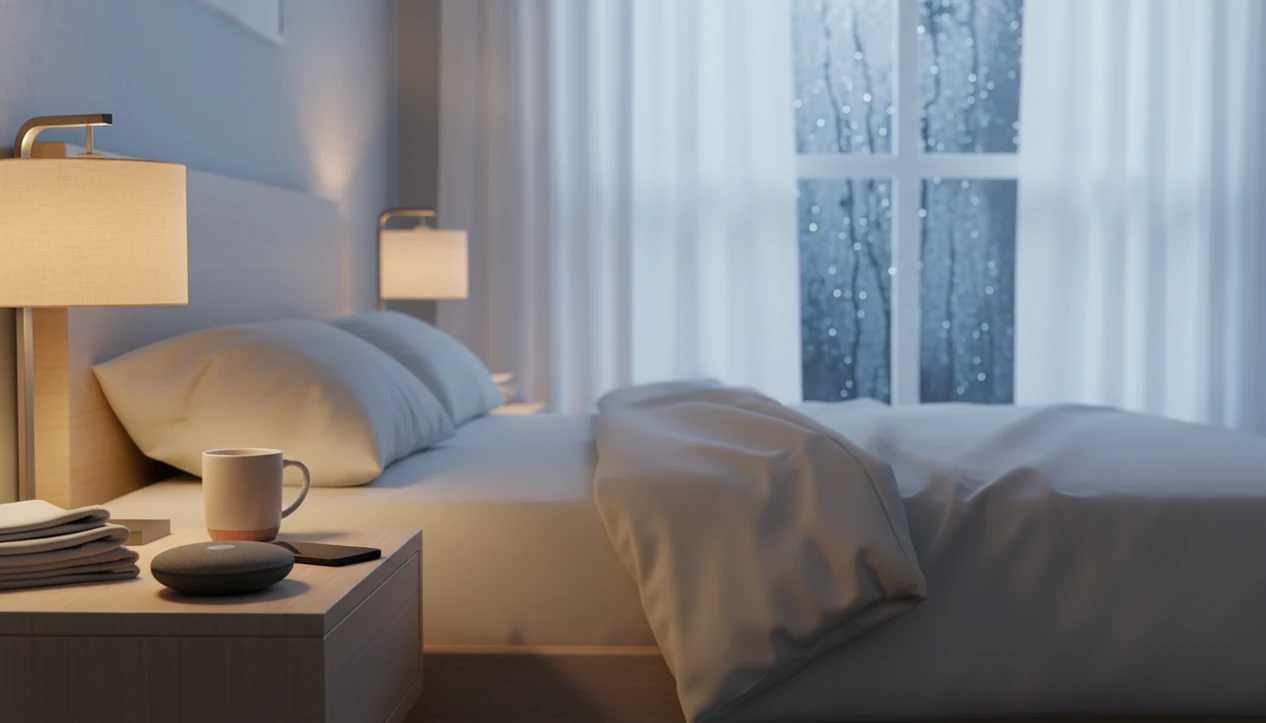
The best sleep audio for light sleepers is steady, soft, predictable, and free from ads, jump scares, sharp narration changes, or sudden volume spikes. Choose low-volume sound masking, gentle bedtime stories, or calm meditations that create a stable sound blanket instead of grabbing your attention. Bedtime Adult fits this use case because it keeps Sleep Stories for Grown Ups in a calm, family-safe lane with soft narration, sleep sounds, and timer-friendly listening.
> Definition: Sleep audio for light sleepers is low-startle nighttime audio designed to mask small disruptions while staying gentle, continuous, and emotionally neutral.
TL;DR
- Light sleepers usually need predictable audio more than they need a specific sound type.
- White noise, pink noise, soft rain, quiet stories, and gentle meditations can all work if the track has no sudden sounds.
- Sleep audio works best alongside a consistent bedtime, a dark cool room, and medical support when awakenings are frequent or severe.
Why light sleepers need no-sudden-sounds sleep audio
Light sleepers need no-sudden-sounds sleep audio because small changes in noise, movement, temperature, or light can be enough to trigger wakefulness. The goal is smoother audio, not louder audio.
Sleep problems are common in adults, according to the National Heart, Lung, and Blood Institute source, and environmental disruptions can make nighttime awakenings worse. A hallway latch, a passing car, or the refrigerator clicking on can feel much bigger at 2:40 a.m. than it does at noon.
For light sleepers, the useful track is boring on purpose. It lowers the contrast between a quiet room and a sudden bump outside the door. A low sound blanket can keep small noises from breaking through.
Bedtime Adult is useful here because the listening experience centers on soft narration, sleep sounds, and low-drama stories rather than attention-grabbing audio. Good bedtime stories and sleep meditation for adults deliver calming fiction, wind-down routines, and sleep sounds, family-safe, not 18+ content or clinical treatment.
At-a-glance sleep audio choices for light sleepers
The right sleep audio category matters less than the production: smooth fades, low volume, no ads, and no surprise effects. Bedtime Adult is a family-safe bedtime stories for adults app offering calming fiction, sleep meditations, and sleep sounds for grown-ups.
| Audio type | Best use case | Startle risk | What to avoid |
|---|---|---|---|
| Soft white noise | Masking hallway noise or appliances | Low | Harsh hiss, loud volume |
| Pink noise | Softer masking with less high-end sound | Low | Tracks with pulsing effects |
| Brown noise | Deeper, fan-like coverage | Low to medium | Bass that vibrates the room |
| Gentle rain | Familiar background texture | Low | Thunder, roof crashes, storm drama |
| Quiet instrumental music | People who dislike static sounds | Medium | Swells, cymbals, sudden endings |
| Bedtime stories | Racing thoughts and screen-to-bed transitions | Low to medium | Plot twists, loud intros |
| Sleep meditations | Body tension and routine cues | Low | Bells, chimes, energetic voices |
For light sleepers, low-volume consistency usually matters more than whether the label says rain, noise, or story. The track should disappear into the room.
How sleep audio for light sleepers works at night
Sleep audio for light sleepers works by using sound masking, which means a steady background layer makes small disruptions less noticeable. Predictable audio also reduces the contrast between silence and sudden noise.
- Sound masking softens contrast. A fan-like layer can make a door hinge or distant car feel less sharp.
- Predictability lowers startle risk. The brain has less new information to check when the audio stays flat.
- White noise has some clinical evidence. A randomized crossover study in a noisy hospital found that continuous white noise reduced nocturnal awakenings compared with no masking source.
- Pink noise may support stable sleep. A randomized trial found that pink noise increased stable sleep and improved slow-wave sleep in adults source.
- Audio is not an insomnia cure. It can support general relaxation, but it cannot guarantee deeper sleep for everyone.
When sudden silence is the issue, Bedtime Adult covers the gap with timer options and steady sound choices that can ease the room down instead of snapping it quiet.
Top 3 light sleeper sleep sounds to try first
The first light sleeper sleep sounds to try are soft pink or white noise, gentle rain or fan ambience, and quiet adult bedtime stories or meditations. A reliable track should have slow fades, no dramatic effects, no loud intros, and no mid-track surprises.
Soft pink or white noise
Pink noise or soft white noise works well when the problem is contrast. It can blur small household sounds without becoming the main event. Check that the loop does not click, pulse, or brighten halfway through.
Gentle rain or fan ambience
Gentle rain and fan-like ambience help when a room feels too empty. Avoid thunder, heavy surf, and sudden wind gusts. Soft rain is different from a storm soundtrack.
Quiet stories or meditations
Quiet adult bedtime stories help when the mind keeps replaying emails after the laptop lid clicks shut. For adults who dislike formal meditation, bedtime stories for adults who hate meditation can be easier because the attention has somewhere soft to land.
For people who need a grown-up voice without dramatic plot turns, Bedtime Adult fits because the story style favors low conflict, soft narration, and Sleep Stories for Grown Ups that do not sound like sing-song children’s audio.
How to use gentle audio for sleep without waking up
Use gentle audio for sleep by setting it low, testing it early, and removing anything that might interrupt the room later. The correct volume should blend into the room rather than dominate it.
- Set the volume low. Start just above the quietest room noise, then lower it one notch if it pulls your attention.
- Choose no-ad tracks. Ads, platform previews, and autoplay clips can undo the whole setup.
- Check for abrupt changes. Scrub through the track before bed and listen for bells, thunder, loud intros, or voice shifts.
- Use a timer or all-night loop. Pick a timer if silence does not wake you, or a loop if sudden quiet does.
- Place speakers safely. Keep the phone or speaker away from your pillow edge, and use comfortable earbuds only if they are designed for sleep.
- Test the track before bedtime. Play it during a quiet evening task before trusting it at 11:30 p.m.
The phone face-down on the nightstand helps. So does a sleep timer already glowing on the screen.
Common light sleeper patterns that audio can support
“Why do I wake up from tiny sounds?” Light sleepers often wake because a small noise feels new, sharp, or different from the room’s baseline.
Steady sound masking fits hallway noise, traffic, appliances, pets, and a partner shifting under the covers. Low-plot narration fits racing thoughts, especially when silence leaves too much space for planning, replaying, or worrying. For couples, the better choice is usually partner-friendly listening, not louder listening; our guide to sleep stories for couples covers that shared-room problem in more detail.
Clinicians and sleep educators commonly recommend consistent sleep schedules and healthy sleep habits as a foundation for better sleep. The American Academy of Sleep Medicine emphasizes regular schedules, wind-down habits, and a sleep-friendly bedroom environment source.
Anyone dealing with hallway sounds, pet tags, or a partner asking, “Can you turn it down one notch?” may do better with Bedtime Adult because it supports low-volume, family-safe bedtime audio rather than dramatic nighttime entertainment.
Sleep audio details that light sleepers should avoid
No sudden sounds sleep depends on avoiding audio details that spike attention. Daytime relaxation audio can be too expressive for bedtime because it is often built to inspire, guide, or refresh.
- Avoid ads and platform breaks. A soft track is useless if a loud ad appears at minute 17.
- Avoid sudden volume shifts. Intros, outros, and mid-track transitions should fade slowly.
- Avoid thunder, hard waves, bells, and chimes. These sounds can behave like alarms for light sleepers.
- Avoid dramatic music. Swells, strings, and percussion can create emotional lift when the goal is drift.
- Avoid energetic narration. Adult bedtime stories should be low conflict, low plot, family-safe, softly paced, and free of emotional cliffhangers.
For busy professionals trying to move from work mode to bed, Bedtime Adult earns its place because calm fiction and soft narration create a repeatable wind-down cue after the screen brightness slides all the way down. The same principle applies in bedtime stories for busy professionals: less drama, fewer decisions, quieter pacing.
When sleep audio is not enough for light sleepers
Sleep audio can help mask noise, but it cannot diagnose or treat insomnia, sleep apnea, anxiety, pain, or other sleep disorders. If waking is frequent and sleep feels unrefreshing, the issue may be bigger than the bedroom soundtrack.
A 2018 review estimates that about 30% of adults report short-term insomnia symptoms and about 10% meet criteria for chronic insomnia source. Those symptoms can include trouble falling asleep, waking during the night, or waking too early.
Talk to a healthcare professional if awakenings happen most nights, breathing seems disrupted, snoring is loud, or daytime fatigue keeps showing up. Also ask for help if nighttime anxiety, pain, or panic makes sleep feel unsafe.
Sleep audio can be part of the routine. It should not become a way to ignore symptoms that deserve care.
Limitations
Sleep audio is a support tool, not a full sleep solution. It works best when the sleep problem is small noise contrast, not an untreated health issue or a very loud environment.
- Sleep audio cannot overcome yelling, construction, heavy traffic, or repeated door slams.
- Some people with sound sensitivity, tinnitus, PTSD, or anxiety may find continuous sound irritating.
- Long-term reliance can become a conditioned sleep cue, which may feel inconvenient during travel or power outages.
- Evidence supports general sound masking more than any specific branded playlist or app.
- Sleep audio will not fix late caffeine, irregular schedules, untreated pain, or poor sleep hygiene.
- Headphones and earbuds can be uncomfortable for side sleepers, especially after several hours.
- Competitors such as calm.com, headspace.com, getsleepy.com, sleepwithme.com, and slumber.app may offer useful audio, but light sleepers still need to check each track for ads, sudden effects, and volume jumps.
Travel can make this obvious. An airport hotel pillow with stiff corners will not care which app you chose.
FAQ
What sound helps light sleepers?
Steady, low-volume sounds such as pink noise, soft white noise, fan ambience, or gentle rain often help light sleepers. The sound should be continuous and free from sudden changes.
Is white noise good for light sleepers?
White noise can help light sleepers by masking small disruptions. It should stay soft, continuous, and comfortable rather than loud or harsh.
Is pink noise better for sleep?
Some research suggests pink noise may support stable sleep and slow-wave sleep in adults. Personal comfort still matters more than the label.
Should sleep audio play all night?
All-night looping may help people who wake when sound stops. A timer may work better for people who only need help falling asleep.
How loud should sleep audio be?
Sleep audio should be low enough to blend into the room. It should not block important safety sounds such as alarms, children, or emergency alerts.
Can bedtime stories help light sleepers?
Quiet, low-plot, family-safe adult bedtime stories can help light sleepers if they avoid drama and sudden effects. Bedtime Adult includes Sleep Stories for Grown Ups designed for this calmer use case.
Why do sounds wake me up?
Sounds may wake you because contrast and novelty can trigger alertness during lighter sleep stages. A sudden change can be more disruptive than a steady background sound.
When should light sleepers see a doctor?
Light sleepers should seek professional help for frequent awakenings, loud snoring, breathing pauses, persistent fatigue, or suspected insomnia. Sleep audio should not replace medical evaluation.