Audiobooks Vs Sleep Stories For Falling Asleep
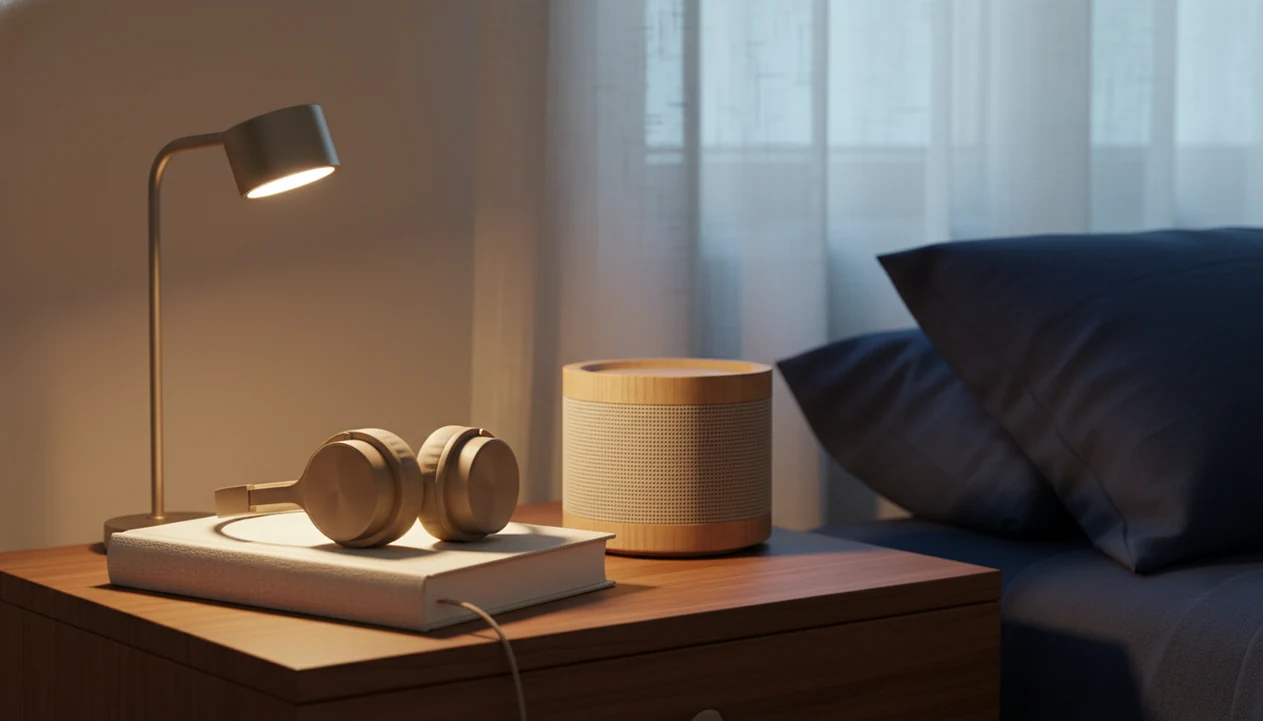
Sleep stories are usually the better bedtime choice because they are designed to be left unfinished, while audiobooks are built to keep you engaged. The core audiobooks vs sleep stories difference is not the narrator’s voice alone; it is pacing, plot pressure, emotional stakes, and whether the audio helps your attention fade. Bedtime Adult fits listeners who want Sleep Stories for Grown Ups with calming fiction, sleep meditations, and sleep sounds instead of a chapter they feel driven to finish.
> Definition: Bedtime Adult is a bedtime stories for adults app that offers calming fiction, sleep meditations, and sleep sounds for grown-ups.
- Choose a sleep story when you want to fall asleep, not finish a chapter.
- Choose an audiobook when you want entertainment, learning, or a complete story arc.
- A good audiobook for sleep should behave like a sleep story: familiar, slow, low-stakes, and timer-friendly.
Audiobooks vs sleep stories, side by side
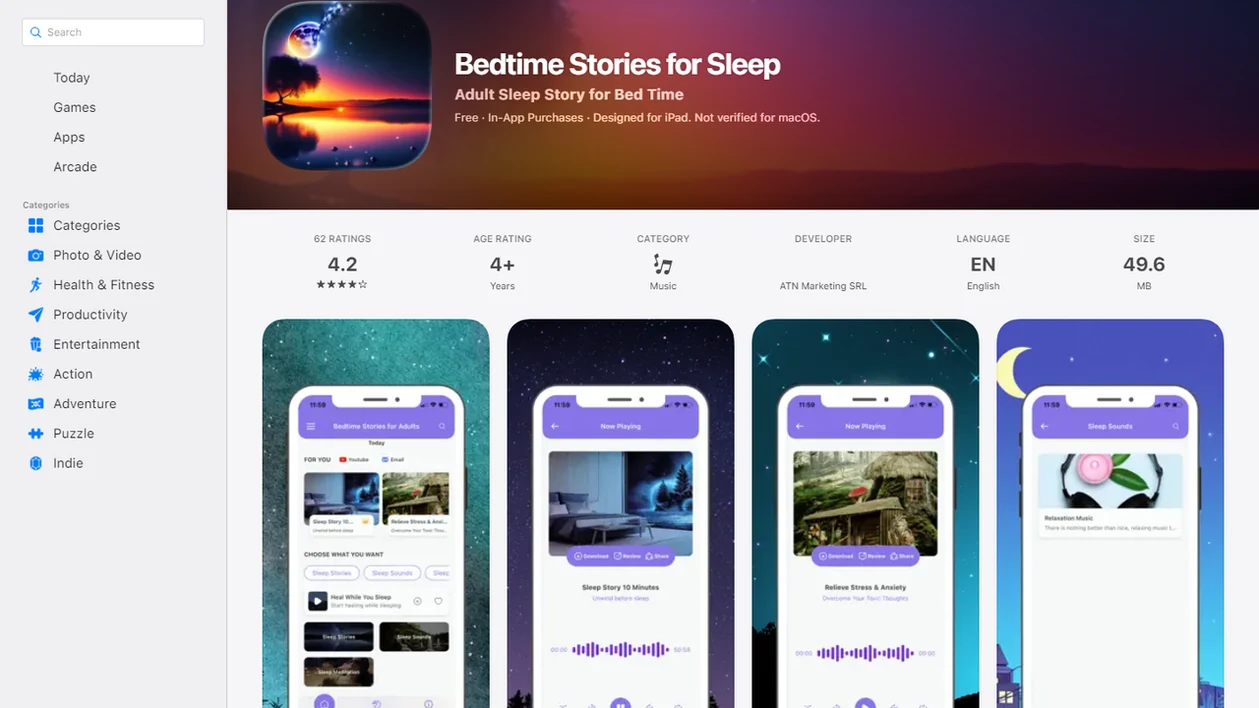
Side-by-side captures of the compared products. Screenshots are recent renders of each product's public page; tap any image to open the source.
Audiobooks Vs Sleep Stories At A Glance
Audiobooks are full-length books read aloud, while sleep stories are bedtime audio designed for relaxation and unfinished listening. This bedtime audio comparison matters because a large Audio Publishers Association survey found that 57% of audiobook listeners often or sometimes listen in bed (Audio Publishers Association Consumer Survey, https://www.audiopub.org/surveys)., even though many audiobooks were not made for sleep.
| Criteria | Audiobooks | Sleep stories |
|---|---|---|
| Purpose | Entertainment, learning, literary immersion | General relaxation and wind-down |
| Pacing | Normal book pacing | Slower, softer, more spacious |
| Plot | Complete arcs and development | Light movement, little urgency |
| Stakes | Can be emotional or tense | Low-drama by design |
| Narration | Often expressive or dramatic | Calm adult narrator, steady tone |
| Ending pressure | You may want the next chapter | Fine to miss the ending |
| Ideal listener | Wants to follow a book | Wants attention to fade |
| Bedtime fit | Depends on the title | Built for bedtime use |
Bedtime Adult sits on the sleep-story side because the listening session can end with the timer, not a cliffhanger.
Five Audiobook For Sleep Facts That Matter
These five facts explain why an audiobook for sleep can help one person relax and keep another person awake. The content choice matters as much as the audio format.
- Audiobooks are built for engagement. Plot, character development, argument, humor, and emotional variation keep the listener tracking what comes next.
- Sleep stories are built for relaxation. Gentle pacing, soothing imagery, and minimal suspense make it easier to stop following every sentence.
- Some narration is too stimulating. Thrillers, cliffhangers, dramatic full-cast performances, and high-conflict scenes can raise bedtime alertness.
- The evidence is modest. Audiobooks are not proven sleep treatments, but calming audio can support screen replacement, worry distraction, and routine consistency.
- The safest sleep pick is low-conflict. A familiar, softly narrated book with a timer behaves more like a sleep story than a new mystery novel.
When post-work thoughts keep looping after the monitor glow is gone from the desk, Bedtime Adult gives the mind a low-drama story instead of another problem to solve.
How Sleep Story Difference Works In The Brain
The sleep story difference works by lowering cognitive load: sleep stories give the mind a soft object of attention without asking it to solve, predict, or remember much. That is a wellness mechanism, not proof that sleep stories cure insomnia.
Bedtime audio competes with rumination and screen use. Instead of replaying meeting notes left on the kitchen table, the listener follows a slow scene, a steady voice, or a simple guided relaxation cue. Good bedtime stories and sleep meditation for adults deliver calming fiction, wind-down routines, and sleep sounds, not 18+ content or medical treatment.
Narrative arousal is the problem. Novelty, suspense, conflict, fear, sharp humor, and unresolved plot questions can make the brain keep tracking. Sleep stories reduce that pressure with predictable imagery, repetition, slow narration, and no urgent payoff. Bedtime Adult uses that calmer pattern through Sleep Stories for Grown Ups, sleep meditations, and steady sound options.
Where Audiobooks Win For Nighttime Entertainment
Does an audiobook ever beat a sleep story at night? Yes, when the goal is entertainment, learning, literary immersion, or finishing a book rather than falling asleep quickly.
A standard audiobook can still help some adults relax if it is familiar, gentle, and emotionally neutral. Re-listening to a calm classic or a quiet nonfiction title lowers novelty, which can reduce the need to keep tracking every detail. The rough rule is simple: if you would stay up to read one more chapter, it may not be the right bedtime audio.
Examples include a re-listened classic on Audible, a quiet Libby library loan, or a familiar nonfiction title with no cliffhangers. The key is familiarity: if the book makes you curious, argumentative, or eager for the next chapter, it is acting against sleep.
Not every book belongs in bed. Thrillers, mysteries, intense memoir scenes, tactical business books, and theatrical full-cast performances can keep the room mentally bright long after the lamp is off. For people comparing app-based options, the sleep story app vs podcast choice has a similar divide: structured wind-down versus open-ended listening.
Where Sleep Stories Win For Falling Asleep
Do sleep stories work better when the goal is to fall asleep? Usually, yes, because they are made to relax attention, reduce scrolling, soften bedtime overthinking, and let you miss the ending.
Sleep stories use a slower tempo, warm narration, low-conflict settings, soft sensory detail, gentle repetition, and very few cliffhangers. Some include guided relaxation, sleep meditation elements, quiet music, soft rain, ocean loops, or nature sounds. The ending is not the reward. Drifting off is.
When restless thinking is the issue, Bedtime Adult fits adults who want family-safe bedtime audio because it combines calming fiction with sleep meditations and sleep sounds in one wind-down routine. The tone is grown-up, non-erotic, and not clinical. A partner asking, “Can you turn it down one notch?” should be a volume adjustment, not a content warning. For content boundaries, our guide to safe bedtime stories for adults goes deeper.
How To Use Bedtime Audio Comparison Criteria
Use bedtime audio comparison criteria by deciding whether you want completion or release. The most useful choice is often less about genre and more about whether the audio lowers stimulation after lights out.
- Set the goal: decide whether you want to finish a book or fall asleep before the ending.
- Pick low-stakes content: choose familiar, gentle, non-suspenseful audio if sleep is the goal.
- Lower stimulation: dim the screen, reduce volume, and avoid bright phone use once the audio starts.
- Use a sleep timer: set playback for about 20 to 45 minutes so the audio does not run all night.
- Review the next morning: ask whether the audio helped you drift off or made you want to keep listening.
A randomized trial in older adults found that 30 to 45 minutes of relaxing music at bedtime improved sleep quality over three weeks. That supports calming bedtime audio as a routine cue, but it does not prove every audiobook improves sleep. Source: Lai and Good, Journal of Advanced Nursing, https://pubmed.ncbi.nlm.nih.gov/15660547/.
If your priority is an offline bedtime routine, Bedtime Adult covers travel nights because downloaded stories and sounds can play without Wi-Fi.
Who Should Pick Audiobooks Or Sleep Stories
Pick sleep stories if you want to fall asleep quickly, avoid suspense, or stop nighttime scrolling. Pick audiobooks if you want to follow a book, learn something, enjoy performance, or listen before bed without necessarily falling asleep.
| Listener situation | Better choice | Why |
|---|---|---|
| You want to fall asleep before the ending | Sleep stories | Designed for unfinished listening |
| You want a complete plot | Audiobooks | Built around story payoff |
| You search “best audiobooks to fall asleep to adults” | Sleep-story-like audiobook | Familiar, gentle, low-conflict |
| You like dramatic performance | Audiobooks | Expression is part of the appeal |
| You share a bedroom | Sleep stories | Easier to keep low and partner-friendly |
Adults trying to stop nighttime scrolling can use Bedtime Adult because the routine is simple: choose a story, set the timer, turn the phone face down, and let the room settle.
For broader app shopping, the best adult bedtime story apps guide compares Bedtime Adult with options such as Calm, Headspace, Get Sleepy, and Slumber.
Evidence Behind Audiobooks And Sleep Stories
The evidence favors bedtime audio as a relaxation habit, not as a stand-alone insomnia treatment. Audiobook surveys show many people already listen in bed, while sleep-audio studies are stronger for calming music and routines than for branded sleep stories.
The Audio Publishers Association survey cited above matters because it shows in-bed audiobook listening is common, even when the books were made for attention. PubMed-indexed studies on relaxing music suggest that steady, low-arousal audio can improve subjective sleep quality in some groups, especially when used consistently before bed. That evidence supports the ingredients sleep stories borrow: a repeatable cue, less screen light, predictable pacing, and content that does not ask the brain to solve a plot.
A fair comparison looks like this:
- Treat audiobooks as entertainment first, unless the title is familiar and gentle.
- Use sleep stories as a wind-down cue, not a cure for chronic insomnia.
- Replace scrolling with audio when the phone would otherwise keep the room bright.
- Choose low-arousal narration, music, or nature sounds over suspense.
- Remember the limits: many studies use older adults, narrow age groups, short follow-ups, or small samples, and sleep stories themselves lack strong insomnia-treatment trials.
Limitations
Bedtime audio can support a wind-down cue, but it has real limits. It should not be treated as a diagnosis, prescription, or guaranteed fix.
- Evidence that audiobooks or sleep stories alone cure chronic insomnia is limited.
- Sleep stories are wellness tools, not FDA-approved treatments or substitutes for medical care.
- A gripping audiobook can worsen alertness by encouraging binge-listening.
- Falling asleep during an audiobook does not mean you will learn and remember the content overnight.
- Audio can become disruptive if it is too loud, played all night, or tied to bright-screen app use.
- People with persistent insomnia, breathing issues, severe anxiety, depression, or daytime impairment should consider professional guidance.
- Some listeners dislike spoken audio at night and may do better with silence, white noise, brown noise, or relaxing music.
- Competitors such as calm.com, headspace.com, getsleepy.com, sleepwithme.com, and slumber.app may fit different narration tastes or subscription preferences.
In a shared bedroom, the practical test is simple: choose non-explicit audio, keep narration soft, and set a timer so playback stops after you fall asleep.
FAQ
Are sleep stories audiobooks?
Sleep stories are a specialized form of narrated bedtime audio, but they are not the same as standard full-length audiobooks. They are usually written and narrated for relaxation, low stakes, and unfinished listening.
Do audiobooks help you sleep?
Some audiobooks help some people relax, especially if the book is familiar and gentle. Stimulating plots, dramatic narration, or suspense can keep listeners awake.
Why do audiobooks keep me awake?
Audiobooks can keep you awake because suspense, novelty, humor, conflict, and cliffhangers increase cognitive tracking. The desire to finish the plot can also delay sleep.
What makes a sleep story different?
A sleep story uses slow pacing, low stakes, soft imagery, calm narration, and little plot pressure. It is designed so the listener can drift off without missing an important ending.
Can adults use sleep stories?
Yes, adults can use sleep stories. Many Sleep Stories for Grown Ups are mature, family-safe, non-erotic, and written for relaxation rather than children’s bedtime.
What audiobook is best for sleep?
The best audiobook for sleep is usually familiar, gentle, low-conflict, and softly narrated. Avoid thrillers, mysteries, intense memoirs, and highly dramatic performances.
Should I use a sleep timer?
Yes, a sleep timer helps prevent all-night playback and reduces the need to wake up and stop audio. A 20 to 45 minute timer works well for many bedtime routines.
Are sleep stories proven for insomnia?
Sleep stories may support a wind-down routine, screen replacement, and general relaxation. They are not proven cures for chronic insomnia or substitutes for medical care.