
10-Minute Sleep Story for Adults for a Quick Wind-Down
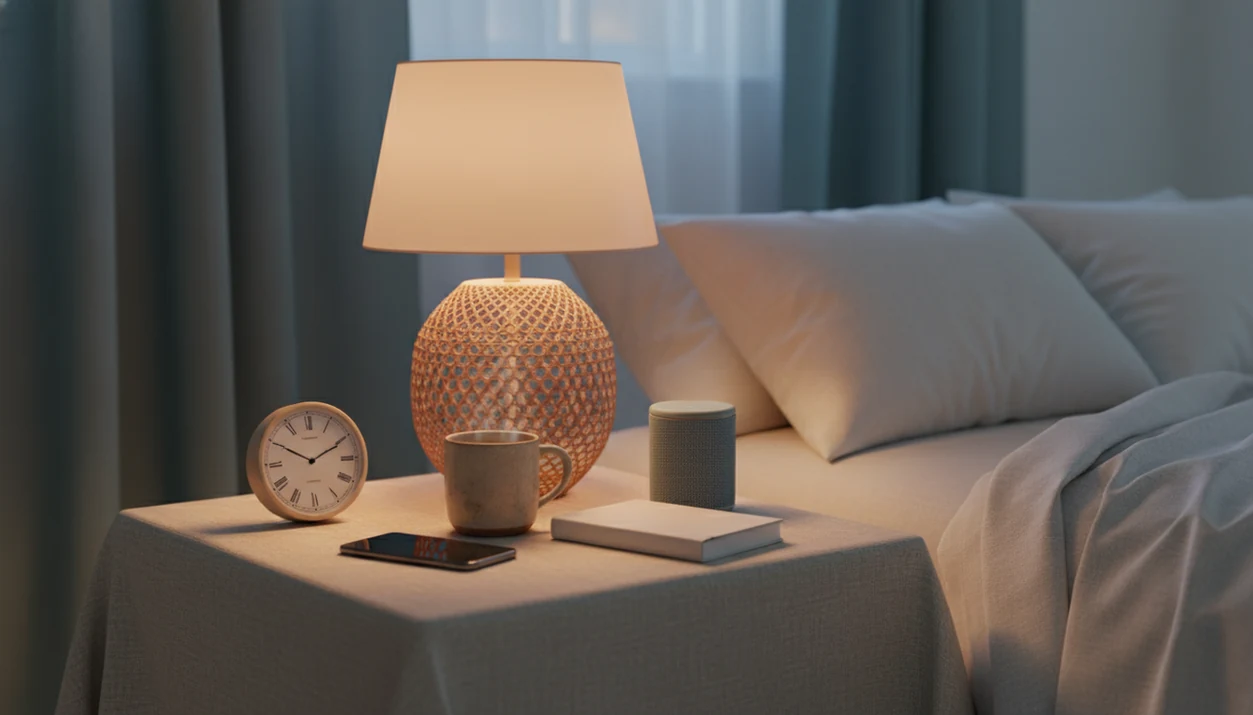
A 10-minute sleep story for adults works best when you need a short, screen-free transition from a busy evening into bed. It gives your mind one calm, low-stakes narrative to follow so racing thoughts have less room to take over.
> Definition: A 10-minute sleep story for adults is a short, soothing audio bedtime story designed to help grown-ups relax, stop problem-solving, and drift toward sleep without suspense, stimulation, or childlike content.
TL;DR
- Use a short adult sleep story when you are tired but mentally wired, especially on busy weeknights.
- Pair the story with dim lights, a no-scrolling rule, and a consistent bedtime cue for the best effect.
- Choose calm narration, predictable imagery, and low-stakes scenes instead of exciting plots, news, or true crime.
What a 10-minute sleep story for adults is
A 10-minute sleep story for adults is bedtime audio built for relaxation and sleep onset, not entertainment or plot completion. The story should be easy to leave unfinished.
The core traits are simple: a calm narrator, slow pacing, cozy imagery, low stakes, and no sudden emotional spikes. Adult means grown-up themes such as travel, nature, quiet routines, or reflective scenes. It does not mean erotic content, clinical sleep treatment, or a children’s story read in a sing-song voice.
A gentle chapter beginning after the intro feels different from a podcast cold open. Nothing is trying to win your attention.
Bedtime Adult is a bedtime stories for adults app that offers calming fiction, sleep meditations, and sleep sounds for grown-ups. For a broader overview of the category, our guide to sleep stories for adults explains how longer and shorter formats differ.
At-a-glance 10-minute wind-down fit
A short story fits nights when you are already sleepy but mentally busy. It may be too brief if your body is wired, anxious, caffeinated, or dealing with ongoing insomnia symptoms.
| Bedtime factor | Good fit | Poor fit |
|---|---|---|
| Best-fit nights | Busy weeknights, mild racing thoughts, already drowsy | Wide awake, highly anxious, in pain |
| Story length | 8 to 12 minutes | Needs 30 minutes or more of guided relaxation |
| Audio style | Soft narration, low-drama story, gentle background sound | Comedy, news, true crime, debate, suspense |
| Setup | Lights dim, phone face down, timer set | Scrolling between chapters |
| Goal | A 10 minute wind down cue | A full evening activity |
For many people, the right moment is after the monitor glow is gone from the desk but the day is still replaying. Ten minutes gives the mind a lane without asking for much effort.
Before You Start a 10-Minute Sleep Story
Before you press play, make sure the night is a fair test for a short story. A 10-minute routine works best when your body is already leaning toward sleep and your setup is not quietly pulling you back into the day.
- Check that you feel drowsy enough for a brief wind-down, not wide awake and looking for a full reset. Heavy caffeine, a charged argument, or a high-stress deadline night can make the first try feel less useful than it really is.
- Set the sleep timer before the opening line so you are not reaching for the phone after the story has started.
- Move bright screens, notifications, and work apps out of reach. Even one glance at a message can turn a calm cue into another loop.
- Choose your listening setup before bed: a quiet speaker, pillow speaker, or low-volume headphones that will not bother your ears or your partner.
- Start on an ordinary sleepy night if you can. Let the routine prove itself when the room is calm, the lights are low, and nothing urgent is waiting on the lock screen.
How a short adult sleep story routine works
A short adult sleep story works by narrowing attention, lowering stimulation, and repeating a familiar cue. In plain terms, it gives the brain one quiet place to go at the same time each night.
- Attentional narrowing: The story gives the mind one safe track instead of letting it jump among tomorrow’s meeting, laundry, and old conversations.
- Predictability: Low-stakes narrative reduces alertness compared with audio that has conflict, jokes, arguments, or breaking news.
- Routine cueing: Repeated bedtime habits can help the brain associate the story with sleep; a 2019 Sleep study linked consistent bedtime routines with better self-reported sleep quality source.
- Stress relevance: Pew reported that 48% of U.S. adults experienced frequent stress, and higher stress is closely tied to poorer sleep source.
- Practical limit: The story supports general relaxation. It does not force sleep.
For already-tired adults, a short story is often easier than a long meditation because it asks for passive listening, not sustained technique.
How to use a quick bedtime story tonight
Use a quick bedtime story as a small routine, not another task to complete. The setup matters as much as the audio.
- Set a 10-minute window before bed, and don’t treat the ending like homework.
- Dim the lights, then place the phone face down or use audio-only playback to avoid scrolling.
- Choose a calm adult story with no suspense, conflict, news, or true crime.
- Listen at a low volume, and let missed details pass without rewinding.
- Repeat the same pattern for several nights so the cue becomes familiar.
The phone face down on the nightstand helps more than people expect. So does a sleep timer already set before the first sentence.
Calming fiction, wind-down routines, and sleep sounds can provide family-safe bedtime audio for grown-ups, not 18+ entertainment or medical treatment. If you want more story options, our page on calming stories to fall asleep covers slower formats.
When a 10-minute sleep story fits best
When should I use a 10-minute sleep story? Use it when you are physically tired but mentally busy, especially on nights when you need a quick bedtime story rather than a full relaxation session.
Good-fit moments include busy weeknights, travel, post-work decompression, already-drowsy nights, and mild racing thoughts. Ten minutes is long enough to interrupt mental chatter but short enough not to become another activity. On a hotel night, even a phone propped on a travel adapter can make the routine feel familiar.
Sleep shortfall is common, which is one reason people look for low-effort sleep aids. In a CDC survey, 35.3% of U.S. adults reported sleeping less than 7 hours on average source.
A 10-minute story usually works best when sleepiness is already present, while longer guided audio fits people who need a slower downshift.
Short adult sleep story playlist criteria
A good short adult sleep story should lower attention, not sharpen it. Build a playlist around audio that stays calm even if you miss half of it.
- Gentle narrator: Choose a calm adult voice, not a bright host or theatrical performer.
- Slow pacing: Leave space between images, scenes, and transitions.
- Familiar setting: Quiet trains, gardens, coastal paths, and evening rooms work better than complex worlds.
- Soft soundscape: Rain, brown noise, or distant train ambience can smooth the edges.
- No cliffhanger: Avoid endings that make you wait for a reveal.
Sleep stories are different from podcasts, regular audiobooks, news, and true crime because they are not trying to inform or surprise you. Falling asleep before the end is not failure. That’s the point.
Tools like Bedtime Adult, Calm, Headspace, and Slumber can help when you want adult bedtime audio in one place; Bedtime Adult emphasizes family-safe Sleep Stories for Grown Ups rather than celebrity-led or meditation-first libraries.
Common 10-minute wind-down mistakes
Most failed short story routines fail because the setup stays stimulating. The story cannot compete well with bright screens, loud volume, and alert-making content.
- Starting while scrolling: If your thumb is still moving, the story becomes background noise instead of a wind-down cue.
- Choosing dramatic audio: Funny, suspenseful, or information-heavy content keeps attention active.
- Using it once: One good night is nice, but bedtime consistency is what builds the association.
- Listening too loudly: High volume or awkward headphones can make the body stay alert.
- Judging by the ending: Hearing the final line is not the success measure.
A partner asking, “Can you turn it down one notch?” is useful feedback. Partner-friendly listening should disappear into the room, not dominate it. For non-explicit options, the guide to non-erotic bedtime stories for adults explains the boundary clearly.
Quick bedtime story progress signs
Progress looks like an easier wind-down, not a guaranteed sleep result. Watch for small signs over several nights instead of chasing one perfect session.
Useful signs include less urge to check your phone, softer thoughts, fewer mental loops, sleepiness arriving before the story ends, and easier repeatability. Keep simple notes for 5 to 7 nights. A line like “less replaying work call” is enough. Don’t turn bedtime into a spreadsheet.
A 2017 randomized controlled trial found that a structured digital CBT-I sleep intervention improved insomnia symptoms when delivered online source. That supports the value of guided routines, but it does not mean a 10-minute story treats insomnia.
Clinicians typically recommend evidence-based care, such as CBT-I, for persistent insomnia symptoms. For occasional wind-down trouble, consistency usually matters more than finding the exact right narrator.
Limitations
A 10-minute adult sleep story is a relaxation tool with clear limits. It can support a routine, but it should not replace medical evaluation when sleep problems are persistent or severe.
- It is not a treatment for chronic insomnia, sleep apnea, restless legs, trauma-related sleep problems, or other medical sleep disorders.
- About 30% of adults report short-term insomnia symptoms, and about 10% report chronic insomnia, according to a 2019 review source.
- Sound can disturb sensitive sleepers or bed partners, especially if the volume is too high.
- Phone-based listening can trigger scrolling if boundaries are weak.
- Ten minutes may be too short when you are wide awake, highly stressed, caffeinated, or in pain.
- Headphones can bother side sleepers or create pressure during the night.
- Persistent insomnia symptoms deserve professional evaluation and evidence-based treatment such as CBT-I.
If the bedside lamp is dimmed at 10:15 p.m. and you still feel wired at midnight most nights, use that pattern as information. Get help.
FAQ
Do sleep stories work for adults?
Sleep stories can help some adults by redirecting attention away from worry and into a calm narrative. They work best as part of a repeatable wind-down routine, not as a guaranteed sleep method.
Is 10 minutes long enough for a sleep story?
Ten minutes can be long enough when you are already tired and need a quick transition into bed. If you are wide awake or highly anxious, a longer routine may fit better.
What makes an adult sleep story feel sleepy?
Sleepy adult stories use calm narration, slow pacing, predictable scenes, and low emotional stakes. They avoid suspense, conflict, news, and information-heavy detail.
Should I finish the sleep story?
No. Falling asleep before the ending is the intended outcome, not a missed goal.
Are sleep stories only for kids?
No. Adult sleep stories are made for grown-up attention patterns, stress, and evening routines without becoming explicit. Apps such as Bedtime Adult focus on family-safe bedtime audio for adults.
Can podcasts replace sleep stories?
Some quiet podcasts may help, but many are too stimulating, funny, dramatic, or information-heavy for bedtime. A purpose-built sleep story is usually less likely to pull attention forward.
When should I get sleep help?
Seek professional help if insomnia persists, breathing seems disrupted, daytime impairment is severe, or you suspect a sleep disorder. Bedtime Adult and similar tools are for general relaxation, not diagnosis or treatment.