
Sleep Stories For Adults That Are Calm, Grown-Up, And Family-Safe
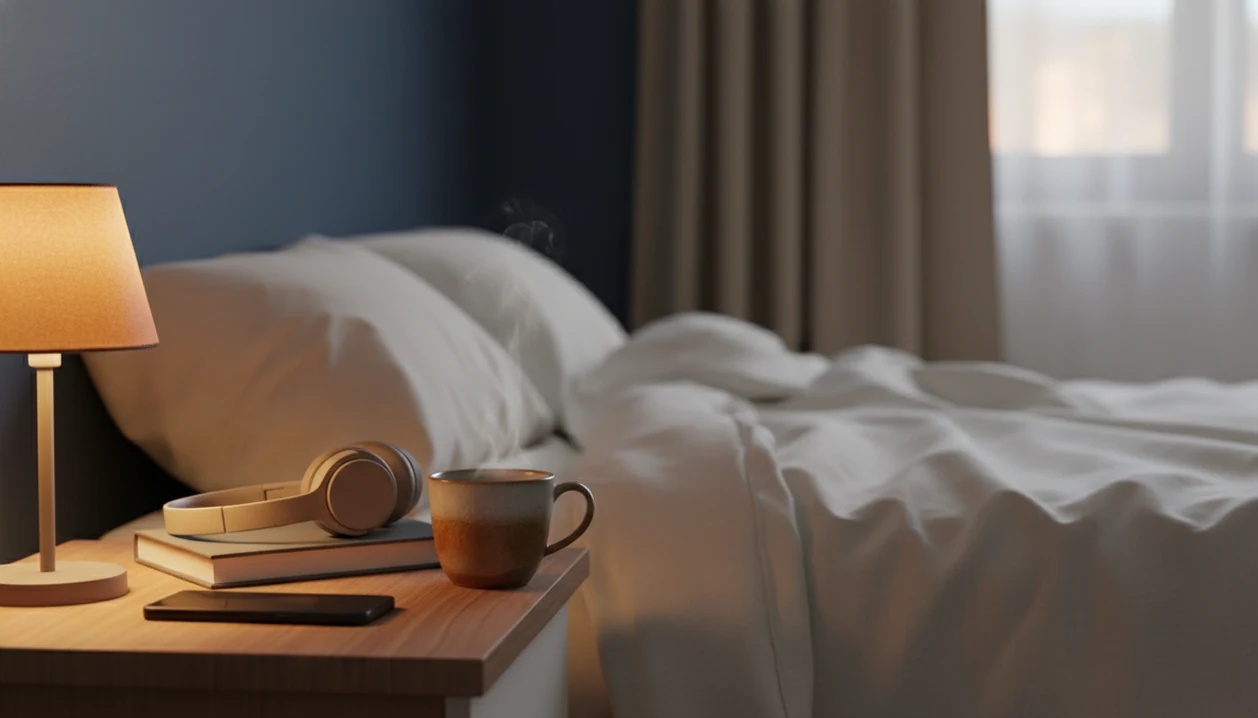
Sleep stories for adults are calm, slow, read-aloud stories designed to help grown-ups relax and drift off, not stay engaged like a podcast or audiobook. They use low-stakes plots, gentle narration, and soothing details so the listener can stop following the story whenever sleep arrives.
Definition: Sleep stories for adults are family-safe bedtime audio stories written with slow pacing, low emotional intensity, and minimal plot tension to support a calmer bedtime routine for grown-ups.
TL;DR
- Adult sleep stories are designed for drowsiness, not entertainment or suspense.
- They differ from podcasts, audiobooks, and children’s stories through slower pacing, softer narration, and lower-stakes plots.
- They can support a wind-down routine, but they are not a medical treatment for chronic insomnia or underlying sleep disorders.
Adult Sleep Stories Definition For Grown-Up Bedtime Listening
Adult sleep stories are grown up sleep stories made for calm bedtime listening, using gentle narration, simple scenes, and low emotional intensity to help adults become sleep-ready. They are family-safe adult sleep stories, not 18+ content, clinical treatment, or children’s tales with a sing-song voice.
The point is not to finish the plot. The point is to lower the room’s mental volume.
Common themes include slow train travel, coastal walks, quiet gardens, familiar kitchens, and cozy routines that do not ask much from the listener. A good story can fill the room like a quiet cottage scene, then soften into the background before the ending matters. For more on non-explicit positioning, the guide to non-erotic bedtime stories for adults covers that distinction directly.
How Sleep Stories For Adults Calm A Racing Mind
Sleep stories for adults work by giving the mind a low-demand focus that is easier to release than a phone, work thought, or suspenseful show. The mechanism is simple: slow pacing, repetitive language, predictable imagery, and soft vocal cadence reduce the need to track what happens next.
They sit between meditation and entertainment. A story may include a breath cue, a body scan cue, or a soundscape like soft rain or distant train ambience, but it still feels like fiction rather than a formal practice. Good bedtime audio uses attention shaping, which means it gently guides attention without rewarding alertness.
You are not supposed to remember the ending. That is part of the design.
Clinicians typically recommend sleep hygiene basics such as consistent bedtimes, lower evening stimulation, and a calmer pre-sleep routine; the CDC’s sleep hygiene guidance makes the same point, so stories can fit inside that routine without replacing medical care (https://www.cdc.gov/sleep/aboutsleep/sleephygiene.html).
Five Facts About Stories For Sleep And Adult Bedtime Audio
- Stories for sleep are scripted to encourage drowsiness rather than attention, so the listener can drift without feeling lost.
- Adult bedtime audio often blends fiction, mindfulness-style cues, and ambient sound such as brown noise, rain, or ocean wash.
- Sleep stories avoid suspense, cliffhangers, loud surprises, and emotional peaks because those elements can keep the brain engaged.
- Most grown-up sleep stories are family-friendly and suitable for shared bedrooms, especially when volume stays low and content is non-explicit.
- Sleep stories are a supportive routine tool, not a cure for insomnia, sleep apnea, chronic pain, or distress that affects daytime functioning.
For adults who ruminate at night, a low-drama story is often easier than silence because it gives the mind one soft place to land. The full routine angle is covered in bedtime stories for adults to fall asleep.
Grown-Up Sleep Stories Versus Podcasts, Audiobooks, And Children’s Stories
Grown-up sleep stories are different from podcasts, audiobooks, and children’s stories because they are built for drowsiness, not learning, suspense, or child comfort. The structure is usually flatter, the narration slower, and the sound levels more controlled.
| Format | Goal | Plot style | Bedtime fit |
|---|---|---|---|
| Grown-up sleep stories | Encourage drowsiness | Low tension, simple scenes, no cliffhangers | Strong fit for quiet wind-down |
| Podcasts | Inform, entertain, or discuss | Variable pace, topic shifts, host energy | Can be too engaging |
| Audiobooks | Follow a book | Chapters, conflict, character arcs | Often invites “one more chapter” |
| Children’s stories | Comfort children | Simple morals, playful voices | May feel too juvenile for adults |
A narrator who sounds calm rather than performative matters. The difference shows up fast when a partner turns over under the duvet and asks, “Can you turn it down one notch?”
Examples Of Calm Adult Sleep Stories That Feel Grown-Up
Calm adult sleep stories usually feel grown-up because the setting is mature and ordinary, while the stakes stay low. These are story types, not required playlists.
- Cozy train journey: A quiet route through dark fields gives movement without urgency, especially with distant rail sounds.
- Quiet seaside inn: The listener follows check-in, warm lamps, and waves outside, with no mystery to solve.
- Botanical garden walk: Plant names, paths, glasshouses, and weather details create gentle focus without conflict.
- Rainy bookshop: Shelves, paper, soft weather, and closing-time routines make a contained adult setting.
- Mountain cabin evening: A simple fire, wool blanket, and dark window view can feel settled without becoming childish fantasy.
Good bedtime stories and sleep meditation for adults deliver calming fiction, wind-down routines, and sleep sounds, family-safe, not 18+ content. For shorter options, a 10-minute sleep story for adults can work when the bedside lamp is already dimmed at 10:15 p.m.
When Sleep Stories For Adults Fit A Bedtime Routine
When do sleep stories for adults fit a bedtime routine? They fit best when you need a screen replacement, a gentle nightly ritual, a travel cue, or a shared-bedroom option that does not demand headphones.
They may not be enough if you need silence, feel irritated by voices, have untreated sleep apnea, live with severe insomnia, or lose sleep because of pain. Tools like Bedtime Adult can be useful when you want family-safe bedtime audio, but the routine around the audio still matters.
How to use sleep stories for adults:
- Dim the lights before starting, so the story becomes part of a lower-stimulation setting.
- Set a timer for 10, 20, or 30 minutes before you press play.
- Place the phone face-down on the nightstand and avoid checking the screen again.
- Choose a familiar tone such as soft narration, rain, or a quiet nature story.
- Repeat the cue most nights, instead of changing the whole routine at once.
Small steps stick.
Sleep Stories For Adults And Sleep Audio Evidence
Direct clinical research on story-only sleep audio is limited, so it is more accurate to place sleep stories inside the broader evidence on relaxation audio, mindfulness, digital sleep tools, and sleep hygiene. They may support relaxation, but they should not be described as insomnia treatment.
The need is real. About 30% of adults worldwide report at least one insomnia symptom, according to a 2018 review in the Journal of Family Medicine and Primary Care (https://www.ncbi.nlm.nih.gov/pmc/articles/PMC6281147/). A U.S. survey found that 35.2% of adults reported sleeping less than 7 hours per night on average, according to CDC short sleep duration data (https://www.cdc.gov/sleep/data-research/facts-stats/adults-sleep-facts-and-stats.html). Digital sleep intervention research has also reported reduced insomnia severity after several weeks, though those programs usually include structured behavioral content, not only stories, as shown in randomized trials of digital CBT-I programs such as Sleepio (https://jamanetwork.com/journals/jamapsychiatry/fullarticle/2522798).
For many adults, sleep audio usually works best when paired with a consistent bedtime and less evening scrolling, while silence fits people who find any voice stimulating. If you are comparing story-led and meditation-led options, the best sleep meditation app for adults guide separates those use cases.
Limitations
Sleep stories are low-risk for many listeners, but they are not the right tool for every sleep problem. The honest limits matter.
- Direct clinical evidence for sleep stories as a standalone intervention is limited.
- Narration can feel distracting, especially if you listen for plot details.
- Background sounds, voices, or accents may bother sensitive sleepers.
- Audio can create device or headphone dependence for some people.
- Shared bedrooms need careful volume control, even with partner-friendly listening.
- Sleep stories do not address sleep apnea, restless legs, depression, chronic pain, medication effects, or other medical causes.
- Chronic insomnia with distress, safety concerns, or daytime impairment deserves professional evaluation.
- Some listeners do better with silence, breath practice, or a written worry list.
A story can soften the landing. It cannot do the work of diagnosis, pain care, or evidence-based insomnia treatment when those are needed.
FAQ
What are adult sleep stories?
Adult sleep stories are calm bedtime audio stories written for grown-ups, with slow pacing, soft narration, and low-stakes scenes. They are designed to support relaxation rather than hold attention.
Do sleep stories actually work for adults?
Sleep stories may help some adults relax by replacing rumination or screen use with a calmer listening cue. Evidence is broader for relaxation audio, mindfulness, and digital sleep support than for story-only audio.
Are sleep stories just audiobooks?
No. Audiobooks usually ask you to follow plot, characters, and chapters, while sleep stories use slower pacing, lower tension, and endings you do not need to remember.
Are adult sleep stories 18+?
No, on family-safe platforms, adult means grown-up in tone and theme, not explicit. Bedtime Adult uses this grown-up, non-explicit positioning.
What makes a bedtime story feel sleepy?
A sleepy story usually has low stakes, soft narration, repetition, sensory detail, and no cliffhangers. It should be easy to stop following.
Can sleep stories replace meditation?
Sleep stories can overlap with meditation when they include breath cues or body relaxation cues. They are usually more narrative and less instructional than formal meditation.
Are sleep stories good for insomnia?
Sleep stories can support a calmer routine for some people with occasional sleeplessness. They should not replace evaluation or treatment for chronic insomnia, distress, or daytime impairment.
When should I stop listening to a sleep story?
Set a sleep timer or auto-stop before you start listening. Let the story fade once you feel drowsy, without trying to reach the ending.