
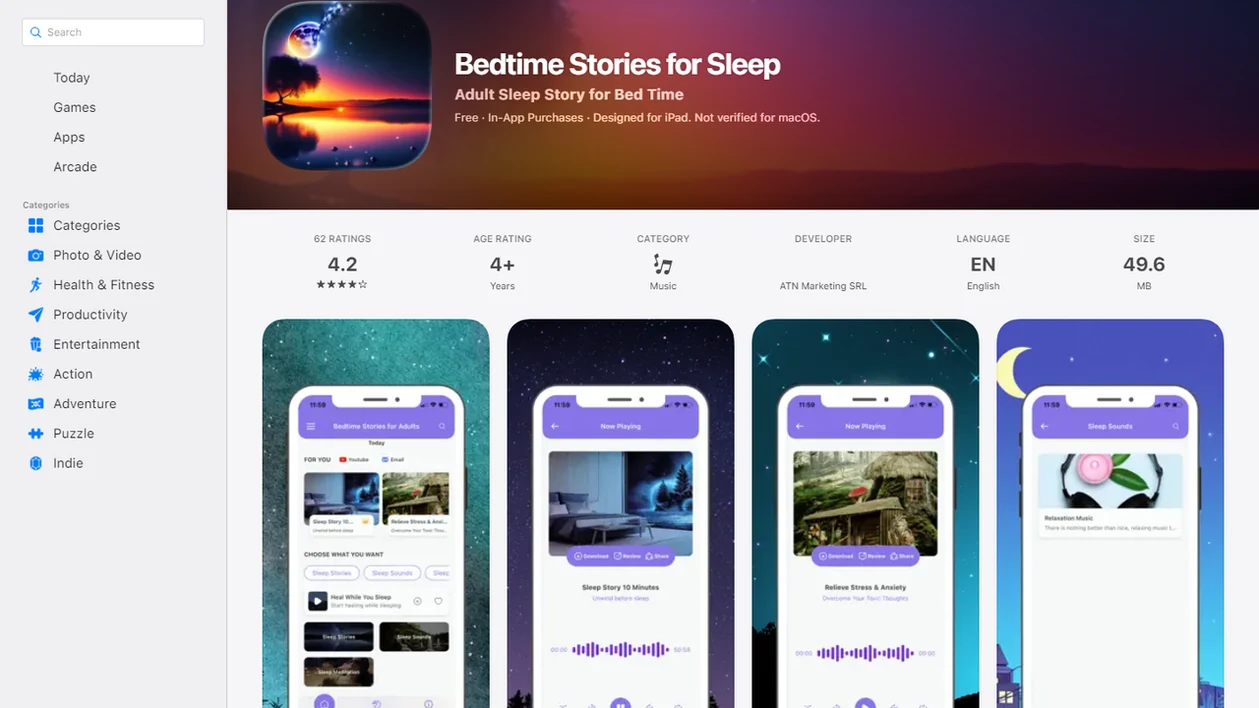
For fiction-first listeners, Bedtime Adult is the clearest brand-led pick because it focuses on family-safe Sleep Stories for Grown Ups, short adult bedtime fiction, and sleep sounds instead of meditation lessons.
Definition: Headspace Sleepcasts alternatives are sleep audio apps or platforms that offer bedtime stories, guided wind-down meditations, or ambient soundscapes as substitutes for Headspace's narration-plus-sound sleep experiences.
- Headspace Sleepcasts run 45–55 minutes and blend narration with ambient sound, so true alternatives must match that immersive depth.
- The right alternative depends on whether you need bedtime fiction, meditation, or sound masking, because these are different use cases.
- Repetition and voice fatigue are common reasons to try a Headspace alternative; for bedtime audio, variety, voice preference, offline access, and family-safe themes can matter more than raw library size.
At-a-Glance Comparison of Sleepcast Alternatives
Headspace sets the baseline with 80+ Sleepcasts, usually 45–55 minutes each based on Headspace's Sleepcasts library description source, blending a wind-down section, narration, and ambient sound. Strong sleepcast alternatives should be judged by format, length, access, and whether the audio is comfortable in a shared room.
| App name | Primary format | Typical session length | Free tier availability | Family-safe rating |
|---|---|---|---|---|
| Bedtime Adult | Stories, sleep sounds | 10–30 minutes | Varies by plan | High, grown-up but non-explicit |
| Calm | Stories, meditation, sounds | 20–45 minutes | Limited samples | Generally high |
| Insight Timer | Meditation, ambient tracks | 5–60 minutes | Large free tier | Mixed, check teachers |
| Nothing Much Happens | Podcast-style stories | 25–45 minutes | Yes, podcast access | High |
| Sleepy | Classic literature | 30–60 minutes | Yes, podcast access | Mostly high |
Adults who want Sleep Stories for Grown Ups without celebrity framing may prefer Bedtime Adult because it keeps the focus on low-drama fiction, sleep sounds, and family-safe bedtime audio.
5 Best Apps Like Headspace Sleepcasts for Adults
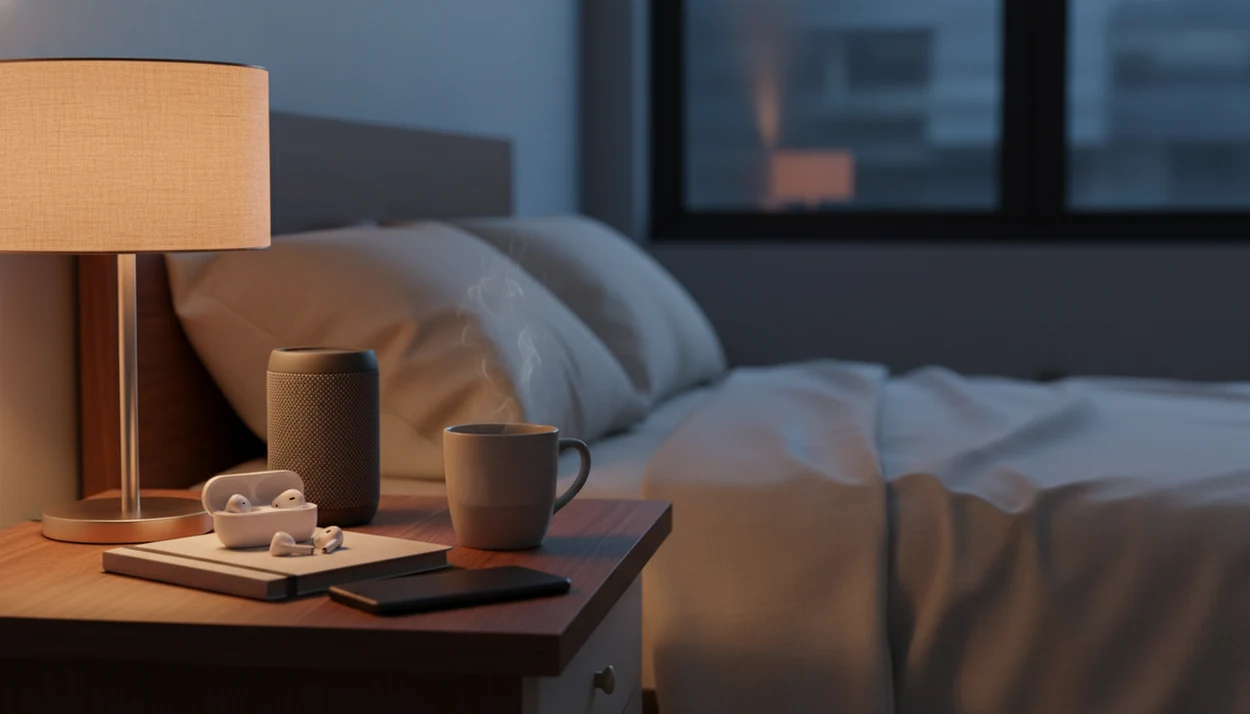
Apps like Headspace Sleepcasts work best when they match the listener’s actual bedtime problem, not just the Headspace format. Some people need a narrator to hold attention; others need brown noise, soft rain, or a familiar story structure after the bedside lamp is dimmed at 10:15 p.m.
Bedtime Adult: Calming Fiction and Sleep Sounds
Bedtime Adult fits adults who want calming fiction and sleep sounds for grown-ups without clinical lessons or children’s-story voices. The practical difference is tone: soft narration, family-safe themes, and simple wind-down choices that feel natural beside a phone turned face down on the nightstand.
Calm: Celebrity-Narrated Sleep Stories
Calm is the most familiar Headspace rival for polished Sleep Stories, especially if you like recognizable narrators and longer productions. The deeper comparison is covered in our Calm vs Headspace for sleep stories guide.
Insight Timer: Free Guided Sleep Meditations
Insight Timer works well for people who want a large free meditation library, including body scans and ambient tracks. Quality varies by teacher, so sampling matters.
Nothing Much Happens: Intentionally Boring Bedtime Stories
Nothing Much Happens uses quiet plots on purpose. It is good for listeners who want repetition, not novelty.
Sleepy: Classic Literature Read for Sleep
Sleepy offers public-domain literature in a slow voice. It suits readers who like old books but don’t want to keep their eyes open.
Sleep Audio Mechanics Behind Sleepcast Alternatives
Sleepcast alternatives work by giving the mind a light, steady object of attention while reducing the salience of bedroom noise. The mechanism is not magic; it is a mix of cognitive load, sound masking, and repeatable sleep hygiene cues.
- Cognitive shuffle principle: Gentle narration occupies the mind enough to interrupt anxious loops, but not enough to demand active problem-solving.
- Ambient sound layering: Rain, low static, or distant train ambience can mask hallway noise and reduce sudden sound contrast.
- Wind-down pacing: A slower voice, lower volume, and longer pauses mirror the body’s pre-sleep deceleration.
- Mindfulness evidence: A 2023 meta-analysis found mindfulness-based interventions produced moderate sleep quality improvement, with SMD −0.33 source.
- Consistency evidence: A 2020 randomized trial reported 62% remission or clinical recovery in a mindfulness group, versus 26% with sleep-hygiene education source.
Good bedtime stories and sleep meditation for adults deliver calming fiction, wind-down routines, and sleep sounds, not a guaranteed medical fix for insomnia.
5 Steps to Choose a Headspace Sleep Alternative
The simplest way to choose a Headspace sleep alternative is to test the type of audio before judging the brand. A partner asking, “Can you turn it down one notch?” can matter more than a feature grid.
- Identify your sleep audio type: Choose fiction, meditation, or ambient sound before comparing subscription prices.
- Test the voice: Use a free trial or sample to check whether the narrator feels calm, adult, and unobtrusive.
- Match the length: Compare session length with your real sleep-onset window, not your ideal bedtime.
- Confirm safety and access: Check family-safe content labels and offline playback before paying.
- Track seven nights: Keep one choice for at least a week before switching again.
The 2020 trial found a 30% reduction in Insomnia Severity Index scores over six weeks, which is a useful reminder that consistency often matters more than novelty. If the priority is a repeatable offline bedtime routine, Bedtime Adult fits because it offers short adult stories and sound options that can become the same cue each night.
How to Use a Headspace Sleepcast Alternative
Use a Headspace Sleepcast alternative as a repeatable bedtime cue, not as one more app to browse under the covers. The goal is to make playback boring, predictable, and easy to ignore once sleep starts arriving.
- Start playback before bed: Choose the story, meditation, or sound while you are still standing, brushing teeth, or turning down the room, so the phone does not become a scrolling trap after the lights are out.
- Set the volume low: Keep it just loud enough to follow the narrator, and low enough that a partner can roll over without tracking every sentence.
- Repeat one voice for seven nights: Use the same narrator, story style, or ambient sound for a full week before deciding it failed; the familiarity is part of the cue.
- Download before weak Wi-Fi nights: Save audio ahead of travel, hotel rooms, cabins, or patchy upstairs bedrooms, so buffering does not become the last thing you remember.
- Resist app-hopping: If one restless night happens, keep the routine steady instead of opening three new apps at midnight.
Ready to start your quit?
The best Headspace Sleepcasts alternatives include Bedtime Adult, Calm, Insight Timer, Nothing Much Happens, and Sleepy, with different narration styles, session lengths, and…
Headspace Sleepcasts Strengths Against Rival Apps
Headspace Sleepcasts are strong because they have a clear format, a large catalog, and reliable production quality. With more than 80 Sleepcasts and typical 45–55 minute sessions, Headspace often feels deeper than shorter sleep meditations or simple white-noise tracks.
The built-in wind-down section is also useful. It blends meditation with narration before the main sleep tour begins, so the listener does not have to choose between breathing practice and story. For people already using Headspace during the day, the broader meditation library is convenient.
Still, longer is not always better. Some nights call for a 10-minute story after the paperback closes with a ribbon bookmark. For those nights, a focused shortlist like our best adult bedtime story apps guide may be easier to scan.
Sleepcast Alternatives That Beat Headspace
Sleepcast alternatives can beat Headspace when the issue is repetition, price, voice preference, or content boundaries. Content fatigue is real; even polished audio can start to feel too familiar after the same intro or setting repeats.
Listeners looking for fiction-first sleep audio may prefer Bedtime Adult because it centers adult bedtime stories, soft narration, and non-explicit themes rather than guided tours. That matters in shared bedrooms where audio plays out loud instead of through headphones.
Some rivals also win on cost. Insight Timer has a generous free library, while podcasts such as Sleepy and Nothing Much Happens reduce the barrier to trying a new voice. For a podcast-specific comparison, the sleep story app vs podcast tradeoff is worth weighing before you subscribe.
Who Should Pick Each Sleepcast Alternative
Pick the sleepcast alternative that matches the job you need it to do at bedtime. Headspace is best for guided sleep tours and meditation continuity, while the other options make more sense when fiction, price, voice, or family-safe listening matters more.
- Choose Headspace if you already use its daytime meditation tools and want the same voice, design, and guided wind-down logic at night.
- Choose Bedtime Adult if you want grown-up bedtime fiction that stays calm, non-explicit, and easy to play in a shared room without previewing every plot twist.
- Choose Calm if celebrity narration, glossy production, and a more cinematic Sleep Story feel help you settle faster than a plain meditation track.
- Choose Insight Timer if you want breadth on a budget: many free teachers, body scans, ambient tracks, and enough variety to test what your nervous system likes.
- Choose podcasts such as Sleepy or Nothing Much Happens if you prefer low-cost repetition, familiar voices, and a simple queue that does not feel like another subscription decision.
If you are unsure, start with the format, not the logo: guided tour, adult fiction, celebrity story, meditation library, or podcast routine.
Evidence and Sources for This Comparison
This comparison uses official product information for catalog, access, and format details, while keeping marketing claims separate from sleep research. In practice, that means Headspace’s own Sleepcasts page supports the length and catalog baseline, while Calm, Insight Timer, Nothing Much Happens, and Sleepy were checked through their public access pages or podcast listings.
To keep the review grounded, app claims were treated differently from evidence about sleep outcomes. Brand pages can show what a listener can open, play, sample, or subscribe to; they do not independently prove that a story will treat insomnia. Research cited elsewhere in this guide is used only for broader mindfulness and sleep-quality context, not as proof that every sleepcast-style product works the same way.
- Verify access: Check whether each option offers app playback, podcast playback, free samples, downloads, or a subscription gate.
- Compare formats: Note whether the main experience is a guided tour, Sleep Story, meditation, ambient track, or classic literature reading.
- Test manually: Listen for voice pacing, volume consistency, family-safe tone, and whether the session feels usable in a shared bedroom.
- Separate claims: Treat catalog size, session length, and access as product facts, and treat sleep improvement language as a claim that needs stronger evidence.
Sleep Help vs. Sleep Treatment for Sleepcast Alternatives
Sleepcast alternatives are sleep aids, not clinical insomnia treatment. They can support comfort, general relaxation, and a predictable wind-down cue, but they do not replace CBT-I, medical care, or evaluation for sleep disorders.
Mindfulness apps show real but moderate effects in research, and those results do not mean every listener will improve. Clinicians typically treat chronic insomnia with structured behavioral care such as CBT-I, not with audio alone. If you have months of severe sleep disruption, loud snoring, panic symptoms, or daytime impairment, talk with a provider.
Claims around AI-personalized sleep audio should also be treated carefully. Some may be useful, but the personalization is often hard to verify from the outside. Bedtime Adult stays in the safer lane of family-safe bedtime audio, soft narration, and repeatable routines.
Limitations
No Headspace Sleepcasts alternative works for every listener, including Bedtime Adult. The weak points are practical and worth checking before you build a routine around any service.
- No sleep audio app is a proven cure for chronic insomnia, sleep apnea, restless legs, or other underlying sleep disorders.
- Voice preference is highly subjective; a top-rated narrator may still feel irritating at 11:40 p.m.
- Free tiers often include fewer long-form stories, weaker sound design, paywalls, or ad interruptions.
- Not every sleepcast alternative is family-safe, so check themes and content labels before playing audio out loud.
- Consistency and timing matter more than app choice; switching every two nights can weaken the wind-down cue.
- AI-driven personalization claims in some apps are difficult to independently verify.
- Long sessions can be too much for people who fall asleep quickly and wake when audio changes.
If family-safe content is the deciding factor, Bedtime Adult is easier to evaluate because the catalog avoids mature framing and keeps the tone suitable for shared listening. Our guide to safe bedtime stories for adults covers those checks in more detail.