
Low-Stakes Fiction for Sleep: Why Calm Stories Help Your Mind Settle
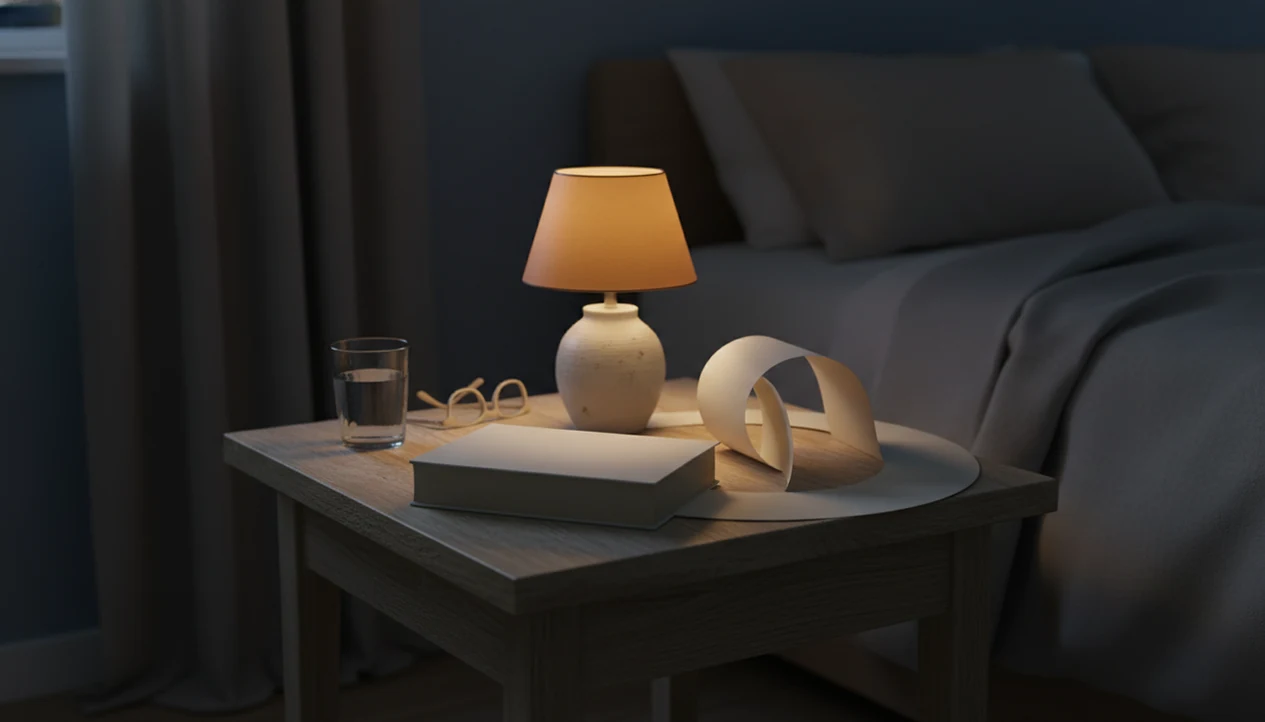
Low-stakes fiction for sleep is gentle, predictable storytelling designed to lower mental stimulation at bedtime. It avoids cliffhangers, high conflict, and emotional spikes so your attention has somewhere soft to rest without becoming hooked.
> Definition: Low-stakes fiction for sleep is calm fiction built around minimal conflict, slow pacing, familiar routines, and emotionally safe outcomes so adults can wind down before sleep.
- The best sleep-safe stories are pleasant but not gripping: enough detail to occupy the mind, not enough suspense to keep it awake.
- Good sleep story design uses predictable outcomes, gentle sensory description, repetition, and soft audio pacing to reduce cognitive arousal.
- Calm fiction can support a bedtime routine, but it is not a cure for chronic insomnia or a substitute for medical care when sleep problems persist.
Low-Stakes Fiction for Sleep Definition
Low-stakes fiction for sleep is calm, adult bedtime storytelling designed to be emotionally safe, slow-moving, and easy to release. It is not the same as a regular novel, a thriller audiobook, or a children’s bedtime story with a sing-song voice.
The phrase overlaps with “nothing much happens stories,” “calm fiction,” and “sleep stories,” but the intent is specific. The story gives the adult mind a quiet place to land. A baker closes the shop. A traveler watches fields pass from a train window. No one is betrayed. No mystery needs solving.
Low-stakes does not mean childish or empty. It means deliberately low arousal. The plot is shaped so you can stop listening without feeling you missed the point.
That matters at 10:15 p.m.
How Low-Stakes Fiction for Sleep Reduces Cognitive Arousal
Low-stakes fiction for sleep works by giving attention a gentle task that does not demand problem-solving. The story becomes an attentional bridge between full wakefulness and rest, not a trigger that forces the mind to track danger, conflict, or unfinished business.
Cognitive arousal means mental activation: racing thoughts, worry loops, rehearsal, planning, and “why did I say that?” replay. A 2013 sleep study found cognitive arousal is strongly associated with insomnia severity, which makes calm pre-sleep mental activity relevant for bedtime routines source.
A low-drama story can interrupt that loop without asking much back. The fan humming near the dresser, the narrator describing a quiet hallway, the simple return to a familiar room. These details occupy just enough bandwidth.
For adults with racing thoughts, low-stakes fiction is often easier than silence because it offers a soft focus without adding a new problem to solve.
Five Sleep Story Design Rules Behind Nothing Much Happens Stories
Nothing much happens stories work because their design lowers emotional and cognitive demand. The listener can follow the scene, enjoy it lightly, and let go when drowsiness arrives.
- Minimal conflict: Problems are tiny, solvable, and emotionally safe. A misplaced scarf matters for two minutes, not three chapters.
- Predictable outcomes: The listener trusts that nothing frightening, humiliating, or tragic is waiting around the corner.
- Slow descriptive pacing: Scenes unfold through texture, light, weather, and movement instead of urgency. Ankles heavy against the mattress, a path lit by porch lamps, a door closing softly.
- Repetition and routine: Familiar loops reduce active problem-solving. The shop opens, the kettle is filled, the window is latched, the lamp goes out.
- Mild pleasant curiosity: The story should be interesting enough to prevent rumination, but not suspenseful enough to keep you awake.
For adults, the boundary is simple: keep the story grown-up, family-safe, and free of erotic turns, jump scares, sharp jokes, or cliffhanger pacing.
Calm Fiction Examples That Feel Sleep-Safe
Calm fiction examples work best when the premise is adult, ordinary, and emotionally low-risk. The setting carries the pleasure, not the plot twist.
The Quiet Train Ride
A passenger watches small stations pass after dusk, notices the fabric seats, and hears distant train ambience under the narration. The movement is steady, and nobody is rushing to arrive.
The Evening Garden Walk
A gardener checks herbs, folds a canvas apron, and follows a path back toward a dim kitchen window. Routine does most of the work.
The Rainy Bookshop Errand
A person returns a borrowed novel, listens to rain on the awning, and chooses a paper-wrapped notebook. The errand has shape, but no pressure.
The Harbor Market Morning
A slow walk past fruit crates, rope coils, and quiet stalls gives the mind soft sensory detail. It feels grown-up, cozy, and safe.
For more adjacent examples, our guide to grown-up bedtime stories explains how adult tone differs from children’s storytelling.
Low-Stakes Fiction vs Regular Audiobooks and Sleep Meditation
Low-stakes fiction sits between audiobooks, meditation, and soundscapes. It uses story, but it avoids the gripping structure that makes many novels hard to stop.
| Format | What it uses | When it fits | Common drawback |
|---|---|---|---|
| Low-stakes fiction | Calm plot, soft narration, safe outcomes | You want story without suspense | A narrator mismatch can distract |
| Regular audiobooks | Full novels or nonfiction chapters | You enjoy longer listening | Cliffhangers may encourage “one more chapter” |
| Sleep meditation | Breath cues, body scans, guided relaxation | You like direct technique | Some people dislike instruction at bedtime |
| Sleep sounds | Rain, ocean, brown noise, white noise | Any narrative feels too stimulating | Less mental focus for rumination |
Sleep meditation is more directive and technique-based than story-based. Sleep sounds may work better if even gentle narrative keeps your mind alert.
Tools like Bedtime Adult sit in the family-safe adult bedtime app category; broader relaxation apps such as Calm, Headspace, and Slumber may also include sleep stories, meditations, or soundscapes depending on the listener’s preference.
When Nothing Much Happens Stories Help at Bedtime
When do nothing much happens stories help at bedtime? They are most useful when the problem is not drama in the room, but mental noise: stress, rumination, screen spillover, or discomfort with silence.
Per the CDC, about one in three U.S. adults report short sleep duration, meaning less than seven hours in a 24-hour period source. A clinical review also reports that roughly 30% to 35% of adults experience brief insomnia symptoms, while about 10% meet criteria for chronic insomnia source.
Clinicians typically recommend behavioral approaches such as consistent routines, stimulus control, and reducing wakeful arousal in bed for chronic insomnia; relaxing pre-sleep routines fit that framework. Low-stakes stories can be one small part of that pattern.
Phone face down. Timer set.
For busy adults, calm fiction usually works best when it replaces late scrolling, while sleep sounds fit people who want no words at all. Our guide to bedtime stories for adults to fall asleep covers routine-building in more detail.
How to Use Low-Stakes Fiction for Sleep
Use low-stakes fiction as a small bedtime ritual, not as another thing to optimize. The goal is to make the story easy to start, easy to ignore, and easy to leave once sleepiness begins.
- Choose a calm, low-conflict story before you get into bed, so you are not hunting through titles with tired eyes and an awake brain.
- Set a sleep timer for about 20 to 45 minutes, long enough to settle but short enough that the audio will not run deep into the night.
- Place the phone face down with the screen dark, away from your direct line of sight. The story should be present; the device should disappear.
- Keep the volume low enough that it blends with the room, like rain outside or a fan near the dresser, rather than a performance you need to follow.
- Stop changing stories when drowsiness arrives. If the plot becomes fuzzy or you miss a sentence, that is the point. Let the story keep going softly without trying to catch up.
Audio Pacing in Sleep Story Design
Audio pacing matters as much as plot because prosody can calm or stimulate the listener. Prosody means the rhythm, tone, pitch, and pauses in a voice; in plain terms, it is how narration feels in the room.
Soft narration, a slower tempo, warm tone, and longer pauses give the listener time to stop tracking every word. Story volume barely above the pillow changes the whole experience. A bright performance, sharp joke timing, or dramatic whisper can pull attention forward.
Ambient sound helps when it supports the story. Soft rain, brown noise, or low ocean wash can create a stable backdrop, but it should not compete with speech.
A Cochrane review of relaxation techniques for insomnia found that relaxation approaches may improve some sleep outcomes compared with no treatment, though evidence quality varies source. That supports the general relaxation logic, not a story-specific cure claim.
Bedtime Adult is a family-safe bedtime app for adults who prefer calm stories, gentle narration, and non-erotic sleep content.
Limitations
Low-stakes fiction is supportive bedtime audio, not a medical treatment or guaranteed insomnia cure. It can help some adults settle, but it will not solve every sleep problem.
- Chronic insomnia deserves professional evaluation, especially when it lasts months or affects daytime functioning.
- Suspected sleep apnea, loud snoring, gasping, or severe morning headaches should be discussed with a clinician.
- Severe anxiety, panic, trauma symptoms, or depression may need care beyond bedtime audio.
- Some people find all narrative content too stimulating and do better with soundscapes, silence, or formal relaxation exercises.
- Poorly designed sleep stories can backfire if they include suspense, trauma, heartbreak, danger, or cliffhangers.
- Narrator voice, accent, pacing, and sound mix strongly affect usefulness. A partner may simply ask, “Can you turn it down one notch?”
- High-quality trials on narrative sleep fiction specifically are limited, even though related evidence on relaxation and cognitive arousal is relevant.
If you prefer family-safe boundaries, non-erotic bedtime stories for adults may be a useful format to compare.
FAQ
What is low-stakes fiction?
Low-stakes fiction is calm, low-conflict storytelling built around safe outcomes, familiar routines, and gentle pacing. For sleep, it avoids suspense and emotional spikes.
Do sleep stories work?
Sleep stories can support relaxation and a repeatable bedtime routine, but results vary by person. They should not be treated as a cure for chronic insomnia.
Why do calm stories help sleep?
Calm stories may reduce cognitive arousal by giving racing thoughts a soft, non-demanding focus. They work best when the plot is predictable and emotionally safe.
Are audiobooks good for sleep?
Some audiobooks help people relax at bedtime. Suspenseful, emotional, or complex books may keep listeners awake.
What are nothing much happens stories?
Nothing much happens stories are gentle stories where routine, setting, and sensory detail matter more than plot. They are designed to be pleasant but not gripping.
Is boring fiction better for sleep?
Sleep fiction should be soothing and lightly engaging, not unpleasantly boring. The goal is calm attention, not irritation.
Can sleep stories worsen insomnia?
Yes, stimulating stories, cliffhangers, or even gentle narrative for sensitive listeners can prolong wakefulness. Persistent insomnia should be discussed with a clinician.
Are sleep stories only for children?
No, many adults use family-safe sleep stories to reduce stress and wind down. Apps such as Bedtime Adult focus on Sleep Stories for Grown Ups without children’s framing.